Why Diastasis Recti Is Also a Pelvic Floor Issue: The Core Connection
Diastasis recti affects both men and women, and it's more than a cosmetic concern. When the abdominal muscles separate, pressure that the core can no longer manage gets redirected downward onto the pelvic floor, which is why the two conditions so often show up together.




Updated June 2, 2026
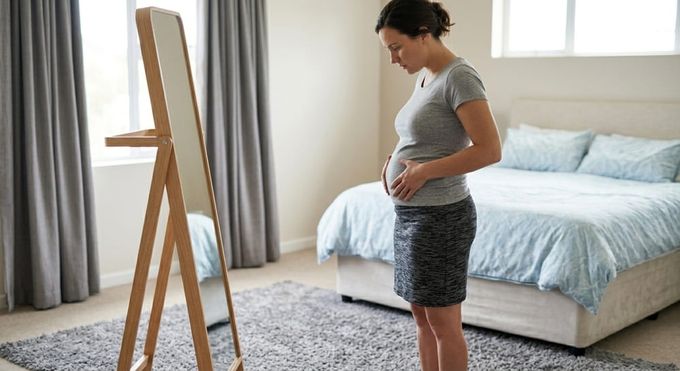
Life gets hectic sometimes, and it's easy to miss what your body's trying to tell you. If you've noticed a bulging tummy, weakness through your midsection, or a core that just doesn't feel right anymore, there's a good chance your abdominal muscles have separated.
This condition is known as diastasis recti, and despite what most people think, it doesn't only affect women after pregnancy. Men can develop it too [1]. What many people also don't realise is that your abdominal wall and your pelvic floor work closely together, so when one's struggling, the other usually feels it too.
What Exactly Is Diastasis Recti?
Your rectus abdominis muscles, the ones that run vertically down the front of your belly and form a six-pack, are held together in the middle by a band of connective tissue called the linea alba. When that tissue gets overstretched and weakened, the two muscle columns drift apart. That gap is diastasis recti.
During pregnancy, the linea alba stretches to make room for your growing baby. But sometimes it stretches further than it can recover from, or it loses its tension afterward.
For men, the causes look different, but the result is the same. Poor prostate health affects the pelvic floor, and abdominal weight gain constantly pushes outward on the linea alba. Heavy lifting without proper core coordination puts repeated pressure spikes through that same tissue. Chronic coughing or straining slowly weakens it over time [3].
And here is something worth knowing before you fixate on the gap size: a wider separation with good tissue tension can actually cause fewer problems than a smaller gap with poor tension.
What matters most is how well that connective tissue functions and how efficiently it transfers force across your core.
Why Does Your Pelvic Floor Care About Diastasis Recti?
Picture your core as a pressure container. Your diaphragm (the dome-shaped muscle under your ribcage that controls breathing) forms the top. Your deep abdominal muscles form the sides. And your pelvic floor (the group of muscles that sit at the base of your pelvis and support your bladder, bowel, and uterus) forms the bottom.
Every time pressure builds inside that container, whether you are coughing, lifting something heavy, or just getting up from a chair, your body needs to manage that pressure evenly across all four walls.
When diastasis recti weakens the sides of the container, pressure does not distribute the way it should. Instead, it gets pushed downward, straight onto the pelvic floor. Over time, that extra load causes real problems.
Keep in mind that the relationship works both ways. Poor pelvic floor coordination also changes how your core handles pressure.
That is why the most effective recovery addresses both the abdominal wall and the pelvic floor together, not separately.
Signs That Both Systems Might Be Involved
You don't need a clinical diagnosis to notice that something is off. Watch for things like:
- A visible bulge or doming along your midline during exercise or when you strain.
- Lower back pain or hip instability that does not seem to have a clear cause.
- Leaking urine when you cough, sneeze, lift, or exercise.
- A sense of heaviness or pressure in your pelvis.
- Bloating or digestive discomfort.
- A core that feels weak or unresponsive no matter how much you train.
Support Your Pelvic Health

Your Best Starting Point to Fixing Diastasis Recti
Before anything, if you can see a pelvic floor physical therapist, do it. A specialist can:
Assess the degree of separation.
Test your tissue quality and tension.
Evaluate your pelvic floor function.
Build a plan that works for your specific situation.
That personalised picture is something no online program or device can fully replicate.
Why is a PT Assessment Important for Diastasis Recti?
This is because, without expert guidance, some of the most common core exercises can actually make things worse.
Crunches, sit-ups, and heavy planks all increase intra-abdominal pressure (pressure inside your belly cavity) without the coordination needed to protect the linea alba and pelvic floor [5].
A pelvic floor physical therapist helps you figure out what is safe and productive for where you are right now.
An Alternative to a PT for Fixing Diastasis Recti
Cost and access are real barriers for many people, and that's completely understandable. When in-person care is not an option, structured at-home programs and biofeedback therapy tools can absolutely help. But they work best alongside professional guidance, not as a substitute for it.
Is Your Pelvic Floor the Issue?
Find out if you're fixing your pelvic core correctly with kGoal Boost's real-time biofeedback.

Treating Diastasis Recti
Recovery works best when you target both the abdominal wall and the pelvic floor together. There are a few ways to approach this, and the good news is they work well alongside each other.
See a pelvic floor physical therapist: This is always the strongest starting point. A specialist can assess your specific situation, identify what your muscles actually need, and build a plan around you. If you can access one, start there.
Follow a structured rehabilitation program: For the abdominal wall specifically, the Tupler Technique is one of the most well-regarded approaches available.
Use a biofeedback device for the pelvic floor.
The Tupler Technique
The Tupler Technique is a rehabilitation program designed specifically for diastasis recti.
The idea behind it is straightforward: bring the separated muscles back together and protect the connective tissue from being repeatedly stretched throughout your day.
It's not just about closing the gap. It's about retraining how you move and carry yourself so the healing can actually stick.
The Tupler Technique program was created by Julie Tupler, a registered nurse, certified personal trainer, and childbirth educator with over 30 years in this specialty. It's also important to note that around 37% of her clients are men. The program covers four areas:
- Tupler Technique exercises. These focus on activating the transverse abdominis (your innermost abdominal muscle, the one that wraps all the way around your body like a corset). The action is drawing your belly button toward your inner spine, not pushing outward.
- Abdominal splinting. A splint worn throughout the day physically brings the muscles and connective tissue closer together, reducing strain while the tissue heals.
- Transverse abdominis awareness. Learning to gently engage that deep core muscle during everyday moments like sneezing, coughing, standing up, and sitting down, so you are not inadvertently stretching the connective tissue dozens of times a day without realising it.
- Movement mechanics. Relearning how to get up, sit down, and transition between positions in ways that take pressure off the healing midline.
The Tupler Technique works on the abdominal wall from above. kGoal Boost works on the pelvic floor from below. Together, they cover both ends of the same problem.
kGoal Boost is a sit-on-top biofeedback pelvic floor trainer that can be used by men or women. You sit on it with your clothes on, open the app, and get real-time feedback on your pelvic floor activity. No insertion, no complicated setup.
What sets it apart from most other devices is that it gives you both physical vibration and visual feedback at the same time, making it much easier to connect with muscles you may have never clearly felt before.
What kGoal Boost Does | How kGoal Complements the Tupler Technique |
|---|---|
Tracks and measures your pelvic floor function | Gives you a full picture of core recovery, not just the abdominal wall |
Guided workouts and in-app games | Keeps you consistent between Tupler sessions |
Personalised training protocols | Addresses your pelvic floor specifically, not just the gap |
Supports Down Training (relaxing the pelvic floor, not just squeezing it) | Especially useful if tight muscles are adding to your symptoms |
Builds body awareness that you carry into daily life | Reinforces the movement habits the Tupler Technique teaches |
Pelvic floor training alone has been shown to improve symptoms like urinary leakage in 50 to 70% of cases [6]. Combine that with the Tupler Technique tackling the root cause of the extra load on the pelvic floor, and your recovery is likely to be more complete and longer-lasting.
What to Avoid While You Are Recovering from Diastasis Recti
Some very common exercises can work against you during recovery. Until your linea alba has regained adequate tension, it helps to avoid or heavily modify:
- Crunches and sit-ups: These increase pressure directly at the midline and can widen the separation.
- Heavy lifting with breath holding: Creates pressure spikes that stress both the linea alba and pelvic floor.
- Aggressive planks early in recovery: Loads the midline before the tissue is ready for it.
- Bearing down or pushing during exercise: Sends extra downward pressure straight onto the pelvic floor.
These apply to both men and women. The goal is coordinated, controlled movement, not aggressive strengthening before the foundation is there to support it.
When to Get Professional Help for Diastasis Recti?
Some situations need more than a self-directed program. It's worth seeing a pelvic floor physical therapist or doctor if you notice:
- Urinary or bowel leakage that is persistent or getting worse.
- Pain during exercise, daily activity, or at rest in the pelvic area.
- Doming along the midline that persists well beyond the early postpartum period or after weight loss.
- No improvement after 8 to 12 weeks of regular, appropriate exercise.
- Difficulty locating or feeling your pelvic floor muscles despite regular practice.
Diastasis Recti Recovery Works Better When You Treat the Whole System
Diastasis recti and pelvic floor dysfunction share the same root cause: a core that can no longer manage pressure the way it should. Addressing one without the other tends to leave people frustrated with results that do not quite stick.
The Tupler Technique offers a structured, supported way to heal the abdominal wall from the inside out. kGoal Boost helps train the pelvic floor with the kind of real-time feedback that makes progress measurable and keeps you consistent. And a pelvic floor physical therapist can tie both together with a plan built around your body specifically.
These are not competing solutions. They work on different parts of the same system, and recovery tends to go better when they're all part of the picture.
Ready to Start Healing
kGoal Boost gives you real-time pelvic floor feedback, guided workouts and more to help heal diastasis recti.
References
1. Benjamin, Van De Water, A., & Peiris, C. (2013). Effects of exercise on diastasis of the rectus abdominis muscle in the antenatal and postnatal periods: a systematic review. Physiotherapy, 100(1), 1–8. https://doi.org/10.1016/j.physio.2013.08.005
2. Guo, J., Liu, L., Hua, M., Han, D., Tang, X., Wen, J., & Zhou, Y. (2025). Analysis of diastasis recti abdominis phenotypes and related delivery factors at 42 days postpartum. Annals of Medicine, 57(1), 2523556. https://doi.org/10.1080/07853890.2025.2523556
3. Dean, K. (2025, September 11). What men need to know about diastasis Recti | May 6, 2026. The Tummy Team. https://thetummyteam.com/what-men-need-to-know-diastasis-recti/
4. Du, Y., Huang, M., Wang, S., Yang, L., Lin, Y., Yu, W., Pan, Z., & Ye, Z. (2025). Diastasis recti abdominis: A comprehensive review. Hernia, 29(1), 222. https://doi.org/10.1007/s10029-025-03417-5
5. Provencal, R. (2026, March 13). Diastasis recti exercises: How to heal AB separation safely after pregnancy — Training by Robyn. Training by Robyn. https://trainingbyrobyn.com/blog/the-best-exercises-for-diastasis-rectibr
6. Price, N., Dawood, R., & Jackson, S. R. (2010). Pelvic floor exercise for urinary incontinence: A systematic literature review. Maturitas, 67(4), 309–315. https://doi.org/10.1016/j.maturitas.2010.08.004
FAQs
Can men get diastasis recti?
Absolutely. Around 30% of men develop it, most often linked to abdominal weight gain, heavy lifting with poor core coordination, or chronic strain from coughing. It is less talked about in men than in postpartum women, which means it often goes undiagnosed for years. The pelvic floor connection is just as relevant for men as it is for women.
Does diastasis recti cause urinary leaking?
Not always directly, but the connection is well established. When your abdominal wall loses tension, your core cannot manage pressure properly, and that excess load gets pushed down onto the pelvic floor. Over time that contributes to stress urinary incontinence [leaking when you cough, sneeze, lift, or exercise]. Treating both the abdominal wall and the pelvic floor together tends to produce better results than treating just one.
Is closing the gap the main goal of treatment?
Gap size matters, but it is not the whole story. Research shows that gap width does not consistently predict how much dysfunction someone experiences [4]. A wider gap with good tissue tension can actually function better than a smaller gap with poor tension. The real goal is restoring coordination, pressure management, and tissue function across the whole core system.
How long does recovery take?
Most people see meaningful improvement within 8 to 12 weeks of consistent, appropriate work. Full recovery, especially when pelvic floor dysfunction is also part of the picture, can take several months. Research shows diastasis recti prevalence decreases from about 60% in late pregnancy to around 32% at 12 months postpartum [2], which shows how much the body can recover with the right approach and enough time.
Can kGoal Boost help with diastasis recti?
kGoal Boost does not treat the abdominal wall separation directly, but it addresses the pelvic floor side of the equation, which is closely connected. By giving you real-time tactile and visual feedback on your pelvic floor activity, it helps you build the muscle awareness, strength, and coordination that support better pressure management across your whole core.