Kegels For Men: Do They Really Work?
Clinical studies show Kegels' effectiveness for urinary incontinence, erectile dysfunction, and premature ejaculation. You'll need 4-6 weeks of daily practice before seeing results, with maximum benefits around 3-6 months. The key is consistency; doing them sporadically won't work.




Updated May 12, 2026

You've probably heard that Kegel exercises can help with everything from bladder control to better sex, but do they actually work for men? It's a fair question; there's a lot of hype out there, and it can be hard to separate fact from wishful thinking. The good news is that solid research backs up the claims.
In this guide, we'll walk you through what the clinical studies actually show about effectiveness, which conditions respond best to pelvic floor exercises, and how to do Kegels correctly so you see real results. Let's dig into the evidence.
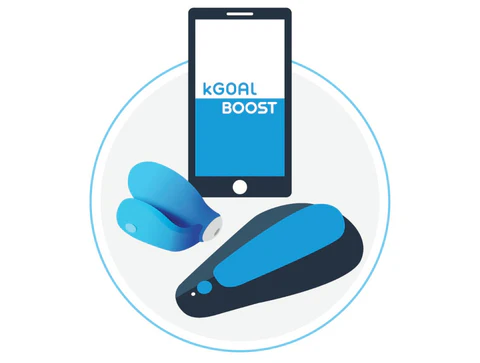
Do Kegels the Right Way
Use kGoal’s guided biofeedback to train accurately and get real results backed by research.
Are Kegels Effective for Men?
Yes, clinical research shows that Kegel exercises can be effective for men when performed correctly and consistently, though results vary by condition [1].
- A 2004 study by Dorey et al. of 55 men with erectile dysfunction found that 40% regained normal function and 34.5% saw improvement after 6 months of daily exercises; 74.5% experiencing real benefits [2]
- A 2014 study by Pastore et al. shows 82.5% of men gained control over premature ejaculation after 12 weeks of pelvic floor muscle rehabilitation [3].
- A 2009 study tracked men after prostate surgery and found that those who performed guided pelvic floor exercises regained continence significantly faster, with 88% achieving control within 3 months compared to 56% in the control group [11]
The key is doing them correctly and sticking with them consistently under proper guidance.
Why Should Men Do Kegel Exercises?
Low sexual stamina, erectile dysfunction, or bladder control are issues that may affect most men at some point in their lives, and they all share a common thread: pelvic floor muscle weakness.
Here's how common these conditions actually are:
- Low sexual stamina (such as premature ejaculation) affects about 30% of men across all age groups [4]. Most men don't bring it up with their doctor, and among those who do, most aren't satisfied with the treatment options they're offered.
- Erectile dysfunction is even more widespread. Studies estimate that roughly 50% of men in the US experience at least some degree of ED [5]. While it becomes more common with age, it's surprisingly prevalent even in younger and middle-aged men.
- Male urinary incontinence will affect over 70% of men at some point during their lifetime [6]. This includes stress incontinence (leaking when you sneeze, laugh, or exercise), overactive bladder, or a combination of both. The risk increases significantly with age and is particularly relevant after prostate issues or surgery.
How Do Kegels Help With Pelvic Floor Muscle Weakness
Think of your pelvic floor muscles like any other muscles in your body. They need regular strength training and flexibility work to function properly. When you don't exercise them, they weaken over time, and that weakening accelerates as you get older.
The good news is that a proper pelvic floor exercise routine takes less than 15 minutes daily and can significantly improve all three areas: sexual stamina, erectile quality, and bladder control.
Whether you're dealing with symptoms now or want to prevent problems down the road, strengthening your pelvic floor is one of the most effective steps you can take. These muscles support critical functions; when you take care of them, they take care of you.
Common Mistakes to Avoid When Doing Kegel Exercises for Men
Don't squeeze the wrong muscles. Your belly, thighs, and butt should stay relaxed. Put your hand on your stomach to check it's not moving. Don't hold your breath during contractions; breathe normally throughout. Also, don't overdo it; stick to 10-15 reps per set. Doing 50 at once causes muscle fatigue and sets back your progress.
Never practice while urinating. Regularly stopping urine mid-stream can mess with your bladder function. Use the stop-flow test only once to identify the muscles, then do your actual training sessions at other times.
Don't expect immediate results. Most men need 4-8 weeks minimum before noticing changes. If you don't see improvement after 2 weeks, don't give up; you're likely still weeks away from visible progress.
If you feel pain during exercises, stop immediately. You're either doing them incorrectly or may have an underlying issue, such as hypertonic pelvic floor muscles, which likely need down training/relaxation practice and not strengthening/Kegel exercise. Consult a urologist or pelvic floor physical therapist for guidance.
Pain During Kegels?
It may mean your pelvic floor is too tense. Boost provides real-time feedback for the workouts you need—strengthening or relaxation.
How to Do Kegel Exercises for Men Correctly
The first step is to find and identify the right muscles, which can be tricky since you can't really see them directly.
Finding Your Pelvic Floor Muscles
Here are four ways to locate them:
- Method 1: Stop urine flow test. Imagine you're urinating and think about how you'd try to stop the flow mid-stream (without using your hands). Those muscles you just tensed to stop peeing are your pelvic floor muscles, and you just did a pelvic floor muscle contraction. Only use this method once or twice to identify the muscles. Don't practice Kegels while actually urinating, as this can disrupt bladder function and increase infection risk.
- Method 2: Prevent gas test. Imagine you're trying to stop yourself from passing gas. The muscles you squeeze are your pelvic floor muscles.
- Method 3: Visual check. Stand naked in front of a mirror. When you correctly do a pelvic floor muscle contraction, you should see your scrotum lift up and your penis draw inward slightly and often lift.
- Method 4: Hand test. Place your hand on the surface of your perineum (between the scrotum and anus) and you should feel muscles moving under the skin when you're correctly activating your pelvic floor.
Starting Position Options to Do Kegel Exercises
Once you've identified the correct muscles and figured out how to activate them, you can start exercising. You should feel a "squeeze and lift" sensation with each contraction in any of the following positions you choose to do Kegels:
- Lying down: Lie on your back with knees bent and feet flat. This is easiest for beginners because gravity assists the lifting motion.
- Sitting: Sit upright in a chair with feet flat on the floor. It's convenient for practicing throughout the day.
- Standing: Stand with feet shoulder-width apart. This position adds gravity resistance, though the difference in effectiveness is minimal for most men.
All three positions work effectively. Choose the one that fits your schedule and comfort level, and don't hesitate to mix them throughout the day. Consistency matters more than position.
Exercise Protocol When Doing Kegel Exercises
Different hold times, rep counts, and rest periods challenge your pelvic floor muscles in different ways, similar to how athletes cross-train rather than doing identical workouts every day.
That said, if you're starting from scratch or want a solid foundational routine, here's an effective progression protocol:
- Week 1-2: Hold contractions for 3-5 seconds, then relax for 3-5 seconds. Do 10-15 repetitions, 3 sets daily.
- Week 3-4: Increase hold time to 5-7 seconds, maintaining 10-15 reps, 3 sets daily.
- Week 5-8: Work up to 10-second holds, maintaining 10-15 reps, 3 sets daily.
- After 8 weeks: Maintain 10-second holds, 10-15 reps, 3 sets daily as an ongoing routine.
Once you've mastered this foundational protocol, introduce variation by alternating between:
- Quick-pulse contractions (1-2 second holds, rapid repetitions).
- Endurance holds (15-20 seconds).
- Progressive resistance patterns (increasing hold times within a single session).
- Combination workouts mixing different hold times.
Remember: The relaxation period between contractions is just as important as the squeeze itself. Your muscles need recovery time to build strength.
The challenge with self-guided training is knowing when to vary your routine and which protocols to use when. This is where guided programs with built-in workout variety become valuable, ensuring you're consistently challenging your muscles in different ways rather than plateauing with the same routine.

When Will I See Results from Male Kegel Exercises?
The timeline depends on what you're treating and can vary significantly from person to person, but below are some general ballpark estimates:
- Urinary incontinence: 4-6 weeks for initial improvement, maximum benefits around 6 months.
- Premature ejaculation: 8-12 weeks for measurable improvement in ejaculatory control.
- Erectile dysfunction: 3-6 months before seeing meaningful results.
- General sexual enhancement: 2-3 months for improved erection quality and ejaculation control.
These timelines assume you're practicing correctly and consistently: 10-15 repetitions, 3 sets daily. Sporadic practice won't produce results. Just like going to the gym, you need regular workouts to build strength.
Are Kegels the Only Kind of Pelvic Floor Exercise?
No, there are relaxation/down-training exercises and strengthening/Kegel exercises.
Kegels are strengthening exercises for your pelvic floor. These can be very helpful, but as with the other muscles in your body, strength isn't the only important dimension in how well they can function. Mobility and flexibility are also critically important.
There are two general classes of pelvic floor muscle dysfunction: when the muscles are too weak and when they are too tense. Muscles that are too tense are called overactive, high-tone, or hypertonic muscles. Overactive pelvic floor muscles struggle to relax, lengthen, and flex, and can cause pelvic pain or other kinds of dysfunction.
Pelvic floor strengthening exercises are generally not the right tool to deal with an overactive pelvic floor. If you're not sure whether your pelvic floor might be overactive, getting advice from a pelvic floor physiotherapist, urologist, or other healthcare provider is a great way to find the right physical therapy or other health regimen for your body.
You may need relaxation and down-training exercises instead of or in addition to strengthening work.
Getting Started: The Technique Challenge
You now understand that Kegel exercises work for 60-85% of men who do them correctly. That last part—"correctly"—is where most men struggle.
You can't see your pelvic floor muscles. You can't feel whether you're lifting or bearing down, especially at first. This is why the effectiveness range is so wide: many men practice diligently for weeks while unknowingly using the wrong muscles.
Start self-guided using the visual check methods outlined above. Practice for 8 weeks and assess results. This works, but you're essentially exercising blindly until you develop the muscle awareness.
Or use biofeedback technology that shows you in real-time whether you're engaging the correct muscles. You get instant confirmation of proper technique and can track strength improvements session to session. It's the difference between guessing and knowing.
If you want to eliminate the guesswork and see measurable progress from day one, explore how biofeedback-guided training works. If you prefer starting on your own, begin with the techniques in the "How to Do Kegels" section above and commit to 8 weeks of daily practice.
Either path works; just pick one and start. The sooner you begin consistent practice, the sooner you'll see results.
Master Kegels with kGoal
Stop guessing—use real-time biofeedback to train the right muscles and see measurable results.
References
Dorey, G. (2003, May). Pelvic floor muscle exercises for men. Nurs Times, 99(19):46-8. https://pubmed.ncbi.nlm.nih.gov/12768973/
2. Cohen, D., Gonzalez, J., & Goldstein, I. (2016). The role of pelvic floor muscles in male sexual dysfunction and pelvic pain. Sexual Medicine Reviews, 4(1), 53–62. https://doi.org/10.1016/j.sxmr.2015.10.001
3. Pastore, A. L., Palleschi, G., Fuschi, A., Maggioni, C., Rago, R., Zucchi, A., Costantini, E., & Carbone, A. (2014). Pelvic floor muscle rehabilitation for patients with lifelong premature ejaculation: a novel therapeutic approach. Therapeutic Advances in Urology, 6(3), 83–88. https://doi.org/10.1177/1756287214523329
4. Crowdis, M., Leslie, S. W., & Nazir, S. (2023, May 30). Premature ejaculation. StatPearls - NCBI Bookshelf. https://www.ncbi.nlm.nih.gov/books/NBK546701/
5. Leslie, S. W., & Sooriyamoorthy, T. (2024, January 9). Erectile dysfunction. StatPearls - NCBI Bookshelf. https://www.ncbi.nlm.nih.gov/books/NBK562253/
6. Leslie, S. W., Tran, L. N., & Puckett, Y. (2024, August 11). Urinary incontinence. StatPearls - NCBI Bookshelf. https://www.ncbi.nlm.nih.gov/books/NBK559095/
7. Kegel exercises for men: Understand the benefits. (n.d.). Mayo Clinic. https://www.mayoclinic.org/healthy-lifestyle/mens-health/in-depth/kegel-exercises-for-men/art-20045074
8. Razdan, S., Pandav, K., Altschuler, J., Moody, K., Martin, L., Patel, H. D., Mohamed, N., Dovey, Z., & Tewari, A. K. (2023, August 15). Impact of exercise on continence in prostate cancer patients post robotic assisted radical prostatectomy: a systematic review. https://pmc.ncbi.nlm.nih.gov/articles/PMC10461030/
9. Dorey, G., Speakman, M., Feneley, R., Swinkels, A., Dunn, C., & Ewings, P. (2004, November 1). Randomised controlled trial of pelvic floor muscle exercises and manometric biofeedback for erectile dysfunction. https://pmc.ncbi.nlm.nih.gov/articles/PMC1324914/
10. Xin, L., Li, M., & Pan, M. (2023). The therapeutic effect of pelvic floor muscle training on stress urinary incontinence following prostatectomy: a systematic review and meta-analysis. Translational Andrology and Urology, 12(7), 1155–1166. https://doi.org/10.21037/tau-23-337
11. C. Davie, T. Cook, and P. Rochester, “Pelvic floor muscle training for the management of urinary incontinence following radical prostatectomy,” Thepogp, 2009. Available: https://thepogp.co.uk/_userfiles/pages/files/journals/literature_example_2.pdf
Disclaimer: This article is for informational purposes only and is not intended as medical advice. Always consult a qualified healthcare provider before starting any new treatment or if you experience persistent bladder symptoms.
FAQs
Do Kegel exercises really work for men?
Yes. Clinical trials show effectiveness rates of 60-85% for men with urinary incontinence, erectile dysfunction, or premature ejaculation when exercises are performed correctly and consistently. Specific outcomes include: 82.5% gained ejaculation control in 12 weeks, 60% regained continence within 6 months after prostate surgery, and 40% regained normal erectile function after 6 months.
How long until I see results?
Most men notice improvements within 4-6 weeks for urinary incontinence, 8-12 weeks for premature ejaculation, and 3-6 months for erectile dysfunction. Consistency matters—you need to practice 3 sets of 10-15 repetitions daily to achieve these timelines.
Can Kegels help erectile dysfunction?
Yes. Research published in 2019 confirms that "pelvic floor muscle training appears effective in treating erectile dysfunction." A 2005 study found 40% of men regained normal erectile function and 35% showed improvement after 6 months of daily exercises—a 75% total response rate.
What are the benefits of Kegels for men?
Research-backed benefits include: improved bladder control (60% post-prostatectomy continence recovery), better ejaculatory control (82.5% success rate), enhanced erectile function (40% regain normal function), increased erection hardness and duration, improved sexual confidence, and faster recovery after prostate surgery.
How do I know if I'm doing them correctly?
Stand in front of a mirror while naked. When you perform a correct pelvic floor contraction, you should see your scrotum lift and your penis draw inward slightly. Your stomach, thighs, and buttocks should remain still. If you're unsure, consult a pelvic floor physical therapist for assessment.
Can Kegels help after prostate surgery?
Yes. Evidence shows that 60% of post-prostatectomy patients regain continence within 6 months when practicing pelvic floor exercises consistently. Research also indicates that men who do exercises before and after surgery recover bladder control faster and are more likely to regain sexual function.
Are there any side effects?
When done correctly, Kegel exercises have no negative side effects. However, if you have an overactive (high-tone) pelvic floor—muscles that are too tense rather than too weak—strengthening exercises can worsen symptoms like pelvic pain. If you experience pain during exercises, stop and consult a healthcare provider.
How many Kegels should I do per day?
The standard protocol is 10-15 repetitions per set, 3 sets daily (30-45 total repetitions). Each repetition involves holding the contraction for 3-10 seconds (depending on your training stage) and relaxing for an equal amount of time. This takes approximately 5-10 minutes total throughout your day.