The Bulbospongiosus Muscle: Key to Better Sex for Men
The bulbospongiosus muscle in males wraps around the base of the penis, playing a direct role in erection rigidity, ejaculation, and orgasm intensity. Here's more on what it does, how it connects to sexual performance, and how to start training it.




Updated September 15, 2026

From doctors to journalists, plenty of people talk about how men can do Kegels to have better sex. But a lot of that talk stays pretty high-level and doesn't get into the details.
For anyone who wants the actual mechanics, this guide breaks down exactly how this muscle and its neighbors shape sexual performance, how erectile dysfunction and Kegels connect, and what the research actually shows about training it.
The Male Pelvic Floor: A Quick Anatomy Lesson
In the male body, the pelvic floor is a hammock of muscles, ligaments, and connective tissue at the base of the pelvis (shown in blue below). It supports the pelvic organs, contributes to core strength, and plays a role in bladder control. Today, though, the focus is on sexual function, where this hammock plays a starring role.
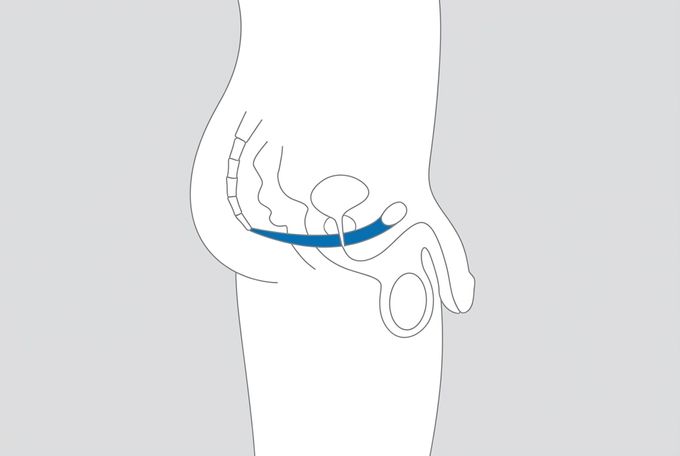
The pelvic floor has three layers, and the outermost one, called the superficial perineal pouch, matters most for sex [1]. This layer contains the ischiocavernosus and bulbospongiosus muscles, and it plays a direct role in ejaculation and erectile rigidity. The innermost layer, called the pelvic diaphragm, includes the pubococcygeus muscle and handles other pelvic floor functions.
A dense network of nerves helps the body regulate these muscles during sex. The ischiocavernosus and bulbospongiosus control blood flow to the penis, and together they affect both ejaculation and engorgement. Strong, coordinated contractions of the bulbospongiosus muscle can also lead to more intense orgasms.
How Is the Pelvic Floor Related to Sexual Dysfunction in Men?
Beyond normal sexual function, the pelvic floor is also closely tied to two of the most common sexual problems men experience.
1. Erectile Dysfunction
Erectile dysfunction (ED) is the inability to generate or sustain an erection.
It's a big deal, both medically and commercially, since drugs like Viagra and Cialis exist largely to treat it.
Quick Facts: ED and the Pelvic Floor
- The bulbospongiosus and ischiocavernosus muscles help regulate blood flow into and out of the penis
- Men with ED tend to be less able to voluntarily activate these muscles than men without ED [4]
- Pelvic floor training has been shown to improve rigidity in some men with ED [4]

2. Premature Ejaculation
Premature ejaculation is the most common sexual problem for men, and it affects the experience for both partners. It's officially defined as ejaculation within the first minute of penetration.
Ejaculation itself is complex. The muscles involved in ejaculation include the prostate gland, pelvic floor, and bladder neck, all contracting together while the urethral sphincter relaxes. An involuntary contraction of the bulbospongiosus muscle is what actually expels semen. It happens without conscious effort, much like how the heart beats without you thinking about it.
The exact mechanisms are still being studied, but researchers have found compelling evidence that voluntary control of the pelvic floor muscles can help delay ejaculation. If lasting longer is the goal, training these muscles may be part of the answer.
» Interested in learning more? Check out our in-depth guide to Kegels and premature ejaculation.
How to Strengthen the Bulbospongiosus Muscle for Better Sex
By now, the bulbospongiosus and ischiocavernosus muscles should feel familiar, since they're behind everything from orgasm intensity to ejaculation control. Bulbospongiosus muscle exercise simply means training them directly.
So how does that work?
Step 1: Identify the Muscles
The first step is identifying these muscles and learning to activate them, which is trickier than it sounds since you can't see them directly. Two approaches tend to work well:
- The stop-flow test: Imagine trying to stop the flow of urine mid-stream, without using your hands. The muscles that tense are your pelvic floor muscles. Imagining you're trying to stop yourself from passing gas works too.
- The mirror test: Stand in front of a mirror and contract. A correct pelvic floor contraction should lift the scrotum and draw the penis inward slightly, similar to an elephant's trunk lifting.
Step 2: Squeeze the Muscles
Once you've found the right muscles, the exercise itself is simple. Squeeze, then relax, since the release matters as much as the squeeze.
You can vary how hard you contract and how long you hold before releasing, but there's no single "correct" procedure. Like any exercise routine, it helps to mix things up over time.
Helpful Resources

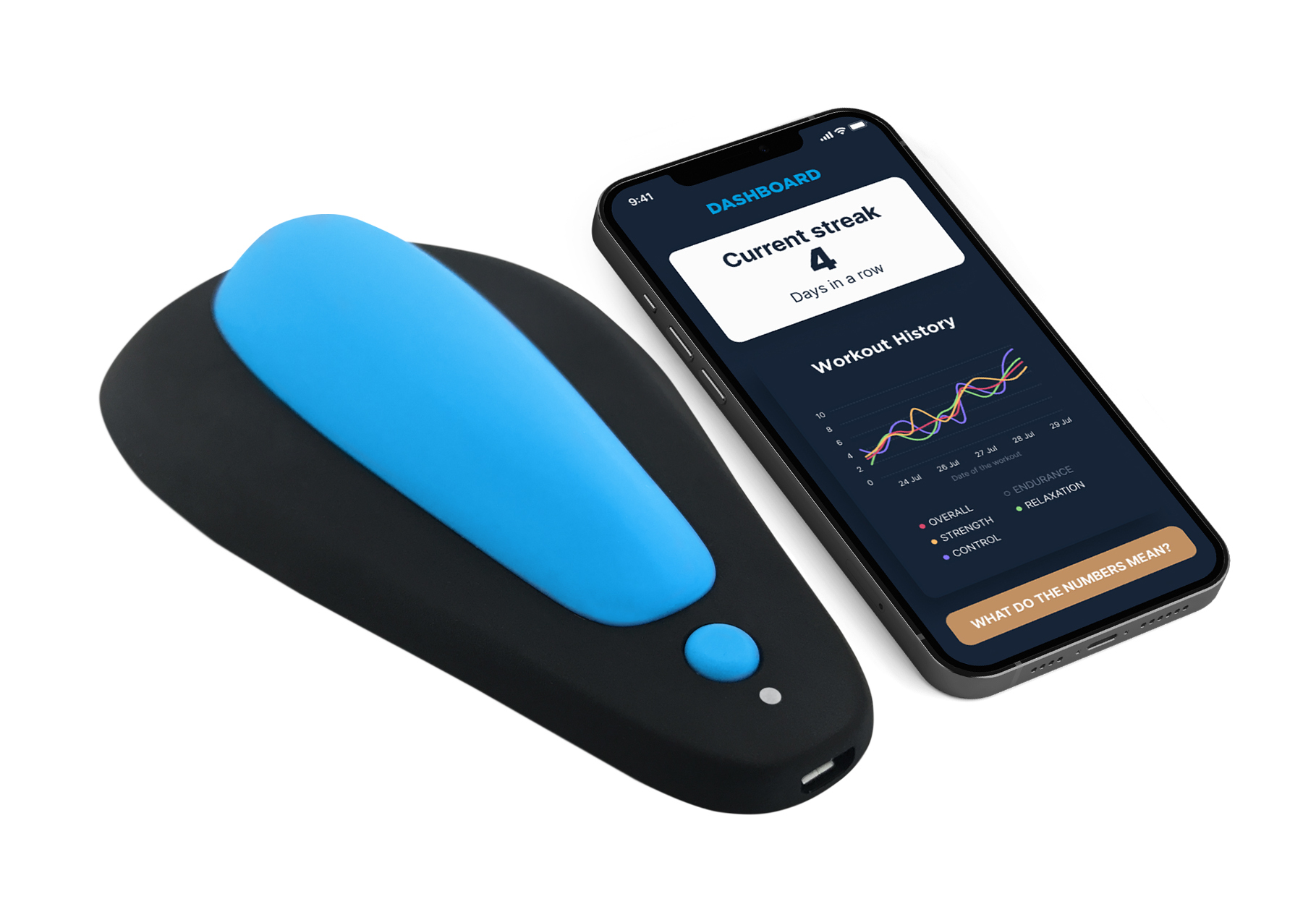
There are plenty of exercise routines available online. You can also use a pelvic floor trainer such as kGoal Boost. It provides real-time biofeedback along with guided workouts you can track using a companion app. This way, Kegels don't have to be boring.
Feel the Difference
kGoal Boost gives real-time feedback so every rep counts toward better sex.
When the Pelvic Floor Is Too Tight
It's worth flagging the flip side, too. Abnormally high pelvic floor muscle tone, sometimes called hypertonic, overactive, or high-tone pelvic floor muscles, can cause its own problems, including pelvic pain and even erectile dysfunction.
This is where hypertonic pelvic floor and premature ejaculation issues often overlap. Men dealing with this kind of tension typically need relaxation practice, often called Down Training or reverse Kegels, instead of standard strengthening work.
» Find out more about the full reverse-Kegel technique in our guide on 6 Kegel Exercises for Men to Last Longer.
What Evidence Is There on Pelvic Floor Exercise and Better Sex?
Healthy skepticism is reasonable here. The internet is full of overstated claims, so here's what the actual research says, pulled from studies done by people who study this for a living.
1. Can Pelvic Floor Exercise Help Men Without Any Sexual Dysfunction?
The short answer: Yes.
An in-depth review of research found that pelvic floor strength is tied to erectile function, even for men without ED. Structured exercise programs in the studies improved both rigidity and control [6]. Similar improvements in ejaculation and erectile function show up across other pelvic floor treatment plans, too [7, 8].
2. Can Pelvic Floor Muscle Training Increase Rigidity for Men With ED?
The short answer: Yes.
Male pelvic floor muscle training has been shown to increase penile rigidity and hardness in some men with erectile dysfunction [4].
3. Can Pelvic Floor Exercise Help With Premature Ejaculation?
The short answer: Yes.
In a study of men with lifelong premature ejaculation, 82.5% gained control of their ejaculatory reflex after a 12-week pelvic floor rehabilitation program [9].
The Bottom Line: A Few Minutes a Day, Real Results
Sexual function and enjoyment are an important part of men's health. There's strong evidence that pelvic floor exercise can support better sex, whether that means sharper sensation or better stamina for men without any issues, or real help with erectile dysfunction and ejaculation control.
For personalized guidance, a urologist or pelvic floor physical therapist are still some of the best options available, especially if symptoms are persistent or paired with pain. Whatever your starting point, understanding your pelvic floor and how it affects your sex life is a solid first step, and consistent training can help you track progress along the way.
Ready to Train the Muscles That Matter?
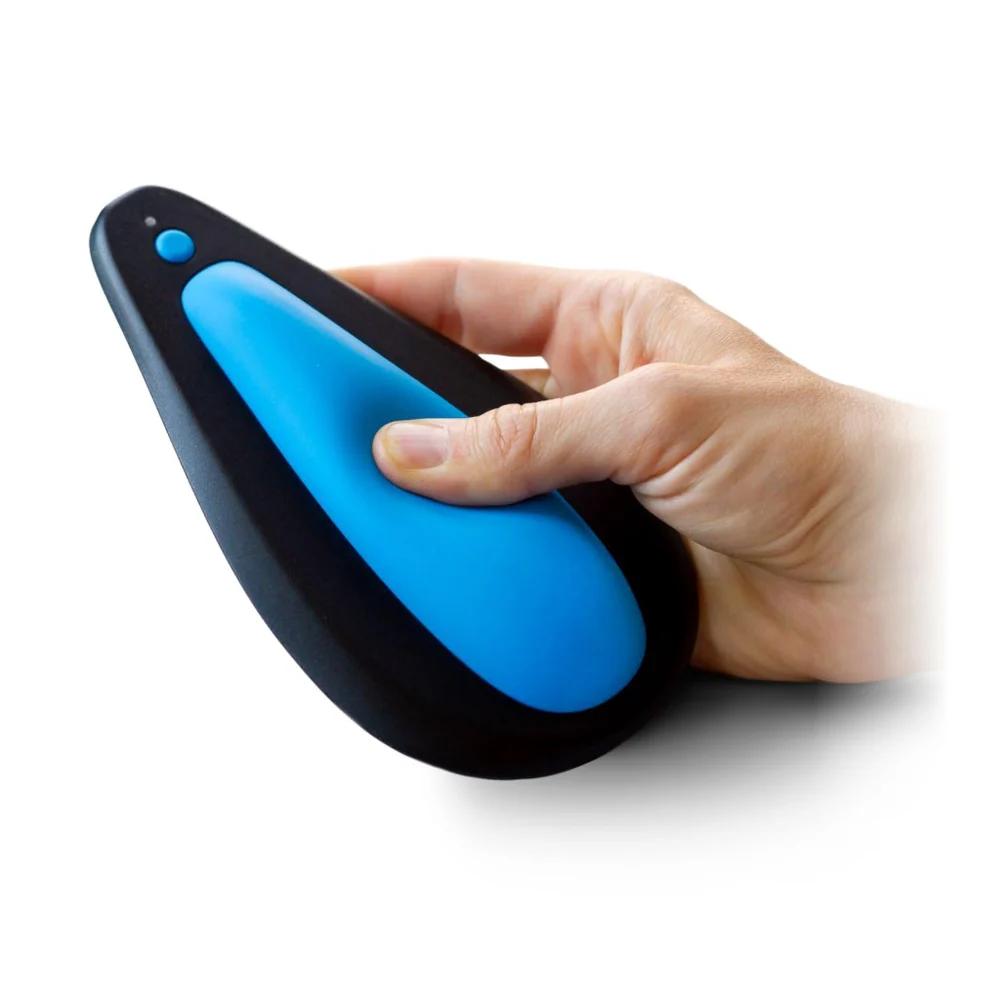
kGoal Boost measures your pelvic floor activation in real time, with guided workouts built for men.
References
1. Cohen, D., Gonzalez, J., & Goldstein, I. (2016). The role of pelvic floor muscles in male sexual dysfunction and pelvic pain. Sexual Medicine Reviews, 4(1), 53–62. https://doi.org/10.1016/j.sxmr.2015.10.001
2. Feldman, H. A., Goldstein, I., Hatzichristou, D. G., Krane, R. J., & McKinlay, J. B. (1994). Impotence and its medical and psychosocial correlates: Results of the Massachusetts Male Aging Study. Journal of Urology, 151(1), 54–61. https://doi.org/10.1016/S0022-5347(17)34871-1
3. Nicolosi, A., Moreira, E. D., Shirai, M., Bin Mohd Tambi, M. I., & Glasser, D. B. (2003). Epidemiology of erectile dysfunction in four countries: Cross-national study of the prevalence and correlates of erectile dysfunction. Urology, 61(1), 201–206. https://doi.org/10.1016/S0090-4295(02)02102-7
4. Rosenbaum, T. Y. (2007). Pelvic floor involvement in male and female sexual dysfunction and the role of pelvic floor rehabilitation in treatment: A literature review. Journal of Sexual Medicine, 4(1), 4–13. https://doi.org/10.1111/j.1743-6109.2006.00393.x
5. Porst, H., Montorsi, F., Rosen, R. C., Gaynor, L., Grupe, S., & Alexander, J. (2007). The Premature Ejaculation Prevalence and Attitudes (PEPA) survey: Prevalence, comorbidities, and professional help-seeking. European Urology, 51(3), 816–823. https://doi.org/10.1016/j.eururo.2006.07.004
6. Siegel, A. L. (2014). Pelvic floor muscle training in males: Practical applications. Urology, 84(1), 1–7. https://doi.org/10.1016/j.urology.2014.03.016
7. La Pera, G., & Nicastro, A. (1996). A new treatment for premature ejaculation: The rehabilitation of the pelvic floor. Journal of Sex & Marital Therapy, 22(1), 22–26. https://doi.org/10.1080/00926239608405302
8. Claes, H., & Baert, L. (1993). Pelvic floor exercise versus surgery in the treatment of impotence. British Journal of Urology, 71(1), 52–57. https://doi.org/10.1111/j.1464-410X.1993.tb15880.x
9. Pastore, A. L., Palleschi, G., Fuschi, A., Maggioni, C., Rago, R., Zucchi, A., Costantini, E., & Carbone, A. (2014). Pelvic floor muscle rehabilitation for patients with lifelong premature ejaculation: A novel therapeutic approach. Therapeutic Advances in Urology, 6(3), 83–88. https://doi.org/10.1177/1756287214523329
FAQs
What muscles control ejaculation and erection?
The bulbospongiosus and ischiocavernosus muscles, both part of the pelvic floor's outermost layer, are the primary muscles that control ejaculation and erectile rigidity. They regulate blood flow into the penis, help maintain firmness, and the bulbospongiosus specifically triggers the contractions that expel semen during ejaculation.
Is the bulbospongiosus muscle the same one you use for Kegels?
Yes. When men do Kegels, they're mainly working the bulbospongiosus and ischiocavernosus muscles, the same ones responsible for erectile rigidity and ejaculation. So "Kegels for men" and bulbospongiosus muscle exercise are really just two names for the same thing.
Can pelvic floor exercise improve sex even without erectile dysfunction or premature ejaculation?
Yes. Research on men without any diagnosed sexual dysfunction has still shown improvements in erectile rigidity, ejaculation control, and sexual pleasure after pelvic floor muscle training [6]. The benefits aren't limited to men managing a specific problem.
Is a hypertonic pelvic floor linked to premature ejaculation?
It can be. Overly tense, or hypertonic, pelvic floor muscles don't always cause premature ejaculation directly, but the same muscle group is involved in both conditions. Men with tension-related symptoms typically need relaxation training, like reverse Kegels, rather than standard strengthening exercises.
How long does it take to see results from pelvic floor exercises for men?
Most people see meaningful changes within 6 to 8 weeks of consistent practice, with maximum benefits typically appearing by 12 to 16 weeks. Individual results vary depending on consistency, technique, and the underlying issue being addressed.