Kegels for Premature Ejaculation: Do They Actually Work?
Research supports pelvic floor training as a real option for premature ejaculation. In one clinical study, 83% of men who tried it were able to last longer during sex [1]. Here's how Kegels stack up against other common treatments, and exactly how to do them right.




Updated September 15, 2026

"Premature ejaculation" (PE) is a bit of a loaded term. It shouldn't be, because it's remarkably common, affecting close to a quarter of men in the US [2].
Factor in guys who don't meet the technical definition (generally, involuntarily climaxing within about a minute of penetration [3]) but still want more say over their timing, and that number climbs a lot higher.
Because climax control feels embarrassing to talk about, fewer than 10% of men bring it up with their doctor. Below, we walk through the most common approaches to PE and look at what the evidence actually shows for each one, with a close look at Kegel exercises for premature ejaculation and why they've become a go-to recommendation.
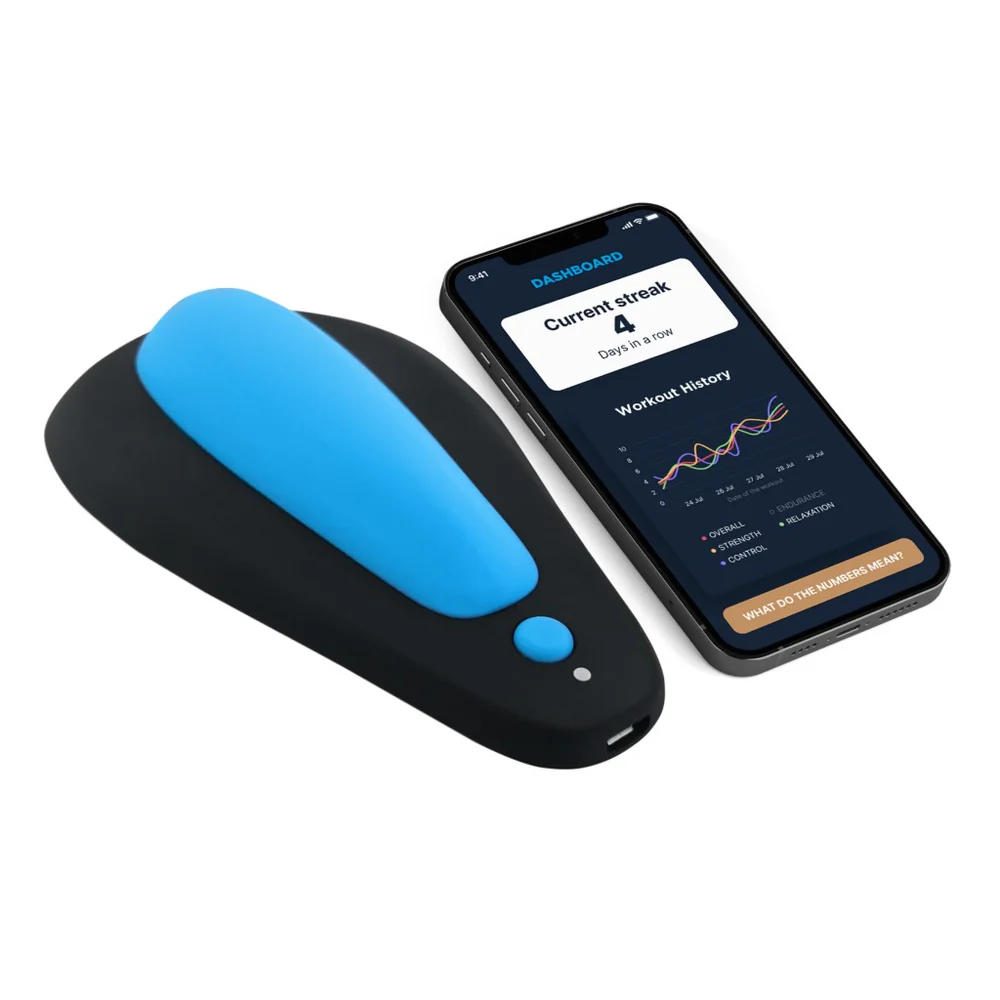
See What's Really Going On
kGoal Boost gives you tactile and visual biofeedback, so you always know if you're doing Kegels right.
4 Common Treatments for Premature Ejaculation
Kegels aren't the only option on the table. Here's how four common approaches compare, including pelvic floor training.
1. Drugs
No drug is currently FDA-approved specifically for premature ejaculation. A couple of prescription options are used off-label instead, meaning doctors sometimes prescribe them for PE even though the FDA hasn't approved them for that purpose.
These drugs include:
- Sertraline: An SSRI-class antidepressant that's FDA-approved for depression, OCD, panic attacks, and PTSD, but not PE. It's a daily pill, and it carries a long list of potential side effects, including seizures, abnormal bleeding, and hallucinations [4].
- Paroxetine: Another SSRI with a similar profile and daily dosing. It's FDA-approved for depression rather than PE, and has its own list of possible side effects [5].
These drugs have helped plenty of men in practice. But if you'd rather skip the side-effect risk, or just prefer a non-pharmaceutical route, it's fair to say there's room for something better.
2. Numbing
Topical products like creams, wipes, and sprays try to numb or desensitize the penis to delay climax, usually with an anesthetic like lidocaine. The idea is to dial down sensitivity without eliminating it entirely.
In practice, this creates a real trade-off: you're trying to delay climax and enjoy the physical sensations of sex at the same time, and numbing products work against the second half of that equation.
3. Psychological and Behavioral Training
Sex has both mental and physical components, and addressing the mental side can meaningfully help with climax control. Two techniques have been around since the 1950s:
- The Start-Stop method: Pause stimulation when you feel close to climax, then resume once the urge passes [6].
- The Squeeze technique: Apply gentle pressure to the head of the penis when you feel close, which can reduce arousal [6].

There's also evidence that Cognitive Behavioral Therapy (CBT), especially when paired with medication, can extend how long men last and improve their sense of control [7].
Psychological approaches tend to work best alongside strategies that address the physical side of stamina, not as a stand-alone fix.
4. Kegel Exercises
Each of the approaches above has a real limitation. Drugs bring side-effect risk and aren't FDA-approved for PE, numbing undercuts the sensations that make sex enjoyable, and psychological techniques can't address a physical cause on their own.
That's the gap Kegels for premature ejaculation are positioned to fill, either as a stand-alone approach or alongside the others. The same pelvic floor muscles are also behind the connection between erectile dysfunction and Kegels, so if stamina isn't your only concern, that's worth a look too.
Is Kegel Training Right for You?
One important caveat before you get started: Kegels aren't the right call for everyone. If you notice pelvic pain, especially pain that predates starting any pelvic floor exercise, that can be a sign of a hypertonic (overly tight) pelvic floor rather than a weak one.
In that case, more strengthening can make things worse. The fix is usually reverse Kegels for premature ejaculation and Down Training, which relax rather than strengthen the pelvic floor.
Our guide on Kegel exercises for men to last longer walks through this relaxation-focused approach in detail, including how to tell the difference and where to start.
Skip the Guesswork
kGoal Boost shows you in real time whether you’re doing Kegels correctly, no rectal probe required.
Do Kegels Actually Help With Premature Ejaculation?
In one clinical study, 83% of participants were able to improve how long they lasted during sex after a course of pelvic floor muscle training [1]. That's the core of the Kegel exercise evidence for premature ejaculation, and it's a big part of why pelvic floor training keeps coming up as a recommendation.
Climax and ejaculation involve a surprisingly complex chain of muscle activations, including the prostate gland and the urethral sphincter, and researchers are still working out every detail. But the pelvic floor's role is already well established.
One meta-analysis (a review of existing research) described pelvic floor muscle training as low-risk, noninvasive, and worth considering as "a preferred approach" for conditions like PE [8].
What to Know Before You Start
Kegels are low-risk, but they're not a one-size-fits-all fix. These are two important considerations to factor in:
- Kegels aren't guaranteed to work for everyone: Climax control usually involves both physical and mental factors, so results vary from person to person. But that's true for every option covered above.
- It's possible to overdo Kegels: If you notice pelvic pain, or a sense of being already "on edge" most of the time, that points toward hypertonic muscles rather than weak ones. In that case, relaxing your pelvic floor (Down Training) is a better fit than more strengthening.
How to Do Kegels for Premature Ejaculation
The exercise itself is simple, but doing it right and sticking with it is what actually moves the needle.
Step 1: Find the Right Muscles
Start by identifying the right muscles, which comes down to the same basics of Kegel exercises that apply no matter what you're training them for:
- Imagine you're peeing and picture stopping the flow mid-stream, without using your hands. Those are your pelvic floor muscles.
- Squeeze and lift, almost like you're also trying to hold in gas. That contraction is a Kegel.
- Breathe normally throughout. Holding your breath adds tension elsewhere in the body and works against you.
Doing pelvic floor exercise is really just repeating that contraction, with variations in how hard you squeeze, how long you hold, and how often you practice. That part really is simple.
Step 2: Apply It During Sex
Practicing the contraction on its own builds the strength, but applying it in the moment is what actually helps with how to use Kegels during sex. The Squeeze technique mentioned earlier gives you a template.
Many men pair this with the Start-Stop method for extra control.
Step 3: Stay Consistent
The simplicity of the exercise cuts both ways. Squeezing and relaxing the same muscle group, over and over, gets boring fast. This boredom is the main reason men abandon a Kegel routine before it has time to work.
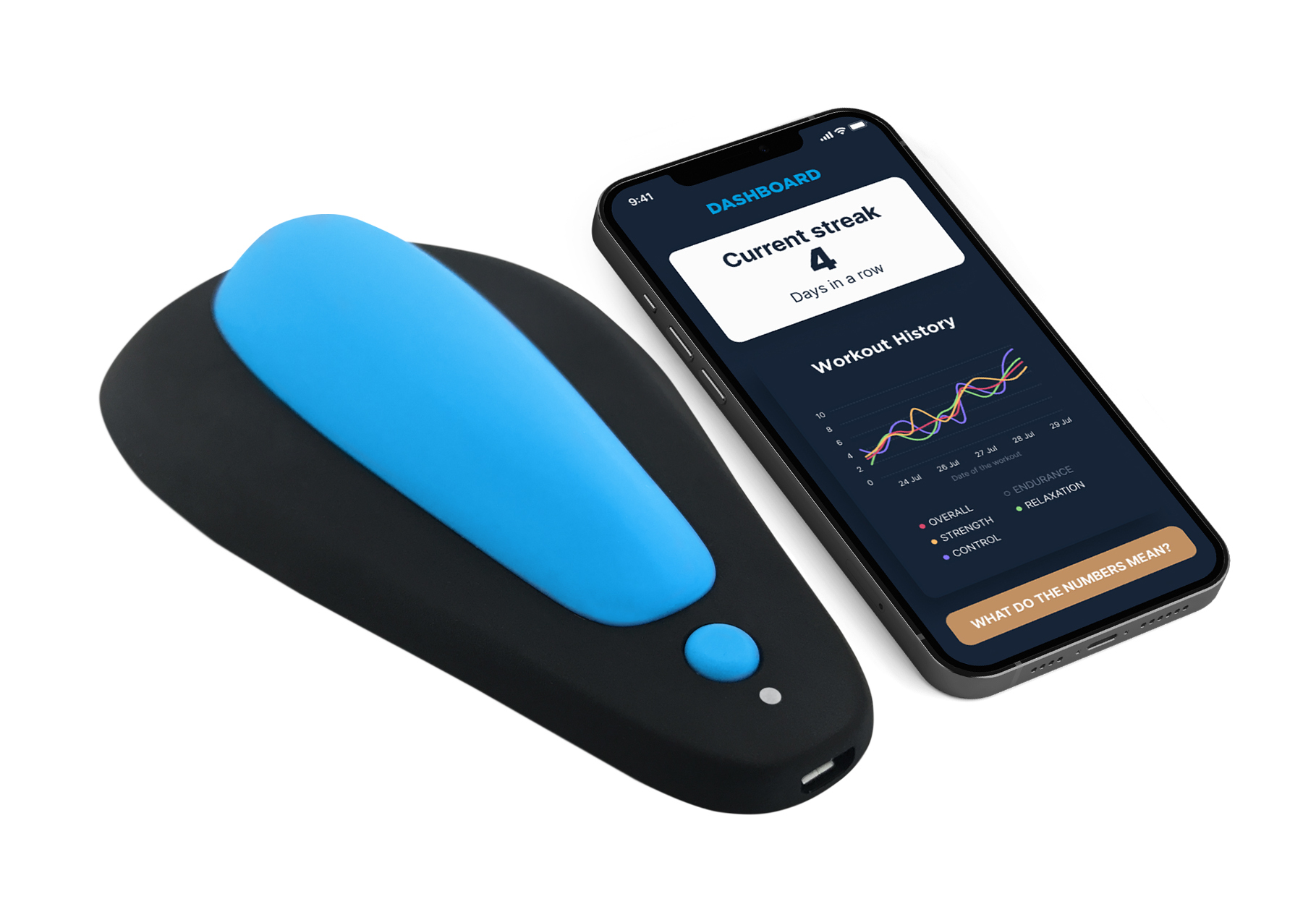
That's the problem kGoal Boost is built to solve. It gives you biofeedback to confirm you're using the right muscles, tracks your progress over time, and turns workouts into something closer to a game than a chore. Unlike tools that rely on a rectal probe, Boost sits under you like a bicycle seat, clothes on.
Take Control of Your Stamina
Train your pelvic floor with kGoal Boost’s guided biofeedback to build lasting control.
The Bottom Line: Kegels Are a Simple, Private Place to Start
Whether you call it premature ejaculation or just a desire for more stamina, this is a topic that touches a lot of men. It's also closely tied to pelvic floor fitness and better sex more broadly.
Every common approach comes with some kind of trade-off. The physical options, in particular, tend to carry real drawbacks.
Research shows Kegel exercises can be an effective tool for many men looking to last longer. The exercise itself is simple and private, so it's worth trying. For the best results, pair it with a psychological technique like Start-Stop, addressing both the physical and mental sides of performance at once.
References
1. Pastore, A. L., Palleschi, G., Fuschi, A., Maggioni, C., Rago, R., Zucchi, A., Costantini, E., & Carbone, A. (2014). Pelvic floor muscle rehabilitation for patients with lifelong premature ejaculation: A novel therapeutic approach. Therapeutic Advances in Urology, 6(3), 83–88. https://doi.org/10.1177/1756287214523329
2. Porst, H., Montorsi, F., Rosen, R. C., Gaynor, L., Grupe, S., & Alexander, J. (2007). The Premature Ejaculation Prevalence and Attitudes (PEPA) survey: Prevalence, comorbidities, and professional help-seeking. European Urology, 51(3), 816–823. https://doi.org/10.1016/j.eururo.2006.07.004
3. Parnham, A., & Serefoglu, E. C. (2016). Classification and definition of premature ejaculation. Translational Andrology and Urology, 5(4), 416–423. https://doi.org/10.21037/tau.2016.05.16
4. MedlinePlus. (2022, January 15). Sertraline. National Library of Medicine. https://medlineplus.gov/druginfo/meds/a697048.html
5. Zhang, D., Cheng, Y., Wu, K., Ma, Q., Jiang, J., & Yan, Z. (2019). Paroxetine in the treatment of premature ejaculation: A systematic review and meta-analysis. BMC Urology, 19(1), 2. https://doi.org/10.1186/s12894-018-0431-7
6. InformedHealth.org. (2022, September 23). Premature ejaculation: Learn more – What can I do on my own? Institute for Quality and Efficiency in Health Care (IQWiG). https://www.ncbi.nlm.nih.gov/books/NBK547551/
7. Li, L., Geng, H., Chen, M., Hu, W., & Ye, Q. (2025). Cognitive behavioral therapy combined with selective serotonin reuptake inhibitors for premature ejaculation: A systematic review and meta-analysis. Andrology, 13(7), 1646–1660. https://doi.org/10.1111/andr.13787
8. Yaacov, D., Nelinger, G., & Kalichman, L. (2022). The effect of pelvic floor rehabilitation on males with sexual dysfunction: A narrative review. Sexual Medicine Reviews, 10(1), 162–167. https://doi.org/10.1016/j.sxmr.2021.02.001
9. UC Davis Health, Department of Urologic Surgery. (n.d.). Premature and delayed ejaculation. https://health.ucdavis.edu/urology/specialties/male_infertility_and_sexual_dysfunction/Male-Reproductive-Sexual-Health/premature_delayed_ejaculation.html
FAQs
Can a Kegel stop an orgasm once it's already started?
No. Once ejaculation begins, it's a reflex your body completes automatically, so a Kegel contraction at that point won't stop it. Applying a Kegel squeeze before you reach that point, using the Squeeze technique, is what can help delay climax.
Can pelvic floor exercises cure premature ejaculation completely?
Not for everyone. Research shows strong improvement rates, including one study where 83% of men lasted longer, but climax control often involves both physical and psychological factors [1]. Many men get the best results by combining Kegels with a technique like Start-Stop.
What's the difference between premature ejaculation and delayed ejaculation?
Premature ejaculation means climax arrives sooner than desired, while delayed ejaculation means it's difficult or impossible to reach climax at all. They have different underlying causes and are treated differently, so Kegel exercises for fixing delayed ejaculation aren't something this evidence base covers [9].
Are reverse Kegels different from regular Kegels for premature ejaculation?
Yes. Regular Kegels strengthen the pelvic floor, while reverse Kegels for premature ejaculation relax it. Reverse Kegels are the better fit if your issue is a chronically tight pelvic floor rather than a weak one.
How long does it take to see results from Kegel exercises for premature ejaculation?
Most men notice initial changes within 6–8 weeks of consistent practice, with maximum benefit typically by 12–16 weeks. Individual results vary based on the underlying cause and how consistently you practice.