6 Kegel Exercises for Men to Last Longer & Boost Sexual Stamina
Pelvic floor exercises can improve sexual stamina by strengthening the muscles that control ejaculation and blood flow. Key exercises include slow Kegels, quick flicks, reverse Kegels, biofeedback training, bridges, and dead bugs.




Published January 9, 2026

If you're finishing too quickly during sex, your pelvic floor muscles could very well be the issue. When they're weak, poorly coordinated, or too tense, climax arrives faster than you'd like, and you feel like you have no brakes.
The good news is that this doesn't have to be permanent. By training these muscles, you can build the control and stamina to last longer. This guide covers six exercises (Kegel and otherwise) that help you gain better command over your ejaculatory reflex, whether you're dealing with lifelong premature ejaculation or just looking for some small stamina gains.
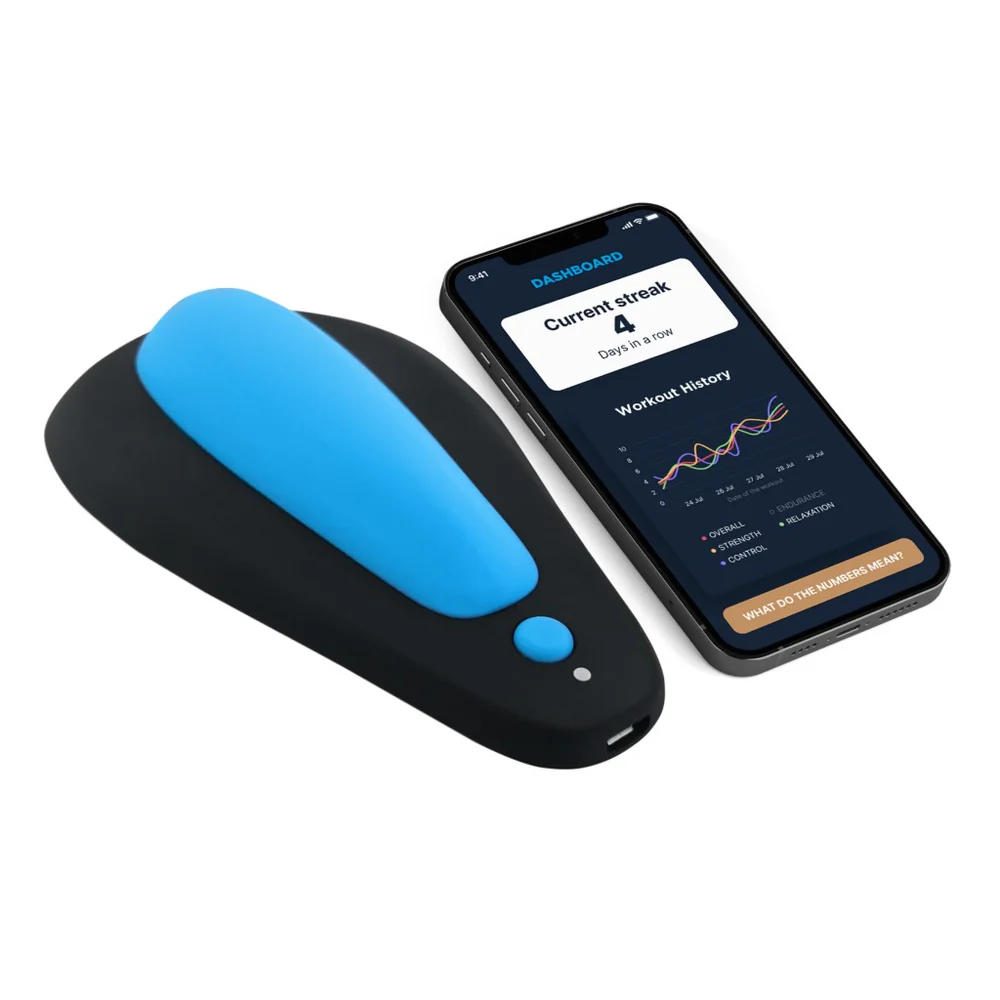
Boost Stamina With Kegels
Learn whether you're doing Kegels correctly with kGoal Boost.
The Connection Between Pelvic Floor Strength and Sexual Stamina
Your pelvic floor muscles coordinate the reflexes that control ejaculation. When these muscles are weak, you lack the strength to "pump the brakes" as arousal builds.
When they're overly tense, you start closer to the edge—so it takes less stimulation to push you over. Either way, the result is the same: you finish before you want to.
What Causes Pelvic Floor Issues That Affect Stamina?
- Weight Gain: Extra weight puts constant downward pressure on your pelvic floor, weakening support and affecting sexual performance [1]
- Chronic Straining: Frequent constipation or a persistent cough forces repeated bearing down, which fatigues and weakens pelvic floor muscles [2]
- Chronic Pelvic Rension: Stress, anxiety, or habitual clenching keeps your pelvic floor in a constantly tight state—meaning you're always closer to the edge before sex even begins [3]
- Sedentary Lifestyle: Prolonged sitting weakens the pelvic floor through disuse, reducing the muscle strength needed for ejaculatory control [4]
Signs you might need pelvic floor training [5]:
- "No brakes" sensation—you can't slow down once arousal builds
- Finishing within 1–2 minutes of penetration, consistently
- Ejaculating before you intend to, even with minimal stimulation
- Feeling like you're already close to the edge before sex begins
- Difficulty distinguishing between the urge to ejaculate and the point of no return
6 Targeted Pelvic Floor Exercises to Increase Sexual Stamina
Exercise 1: Slow Kegels (The Foundation)
These are slow, steady contractions that strengthen the bulbocavernosus muscle, the muscle most responsible for coordinating your ejaculatory reflex.
When this muscle is weak, you lack the strength to "pump the brakes" as you approach climax. A randomized controlled trial found that pelvic floor rehabilitation was significantly effective for treating premature ejaculation [6].
Benefits of Slow Kegels
- Strengthens your ability to delay ejaculation voluntarily
- Improves awareness of your arousal level
- Builds the "braking" strength needed to pull back from the edge
- Increases confidence through measurable progress
How to Do Slow Kegels
- Lie down or sit; use a position most comfortable to you
- Exhale and gently lift the muscles you'd use to stop the flow of urine
- Hold for 6-10 seconds, then relax for 6-10 seconds
- Keep abs, thighs, and glutes relaxed
- Breathe normally throughout
If you can't feel the right muscles, a pelvic floor physical therapist or a device that can assist with biofeedback pelvic floor therapy can confirm you're activating correctly. Start with 10-15 reps, 3 times daily in different positions.
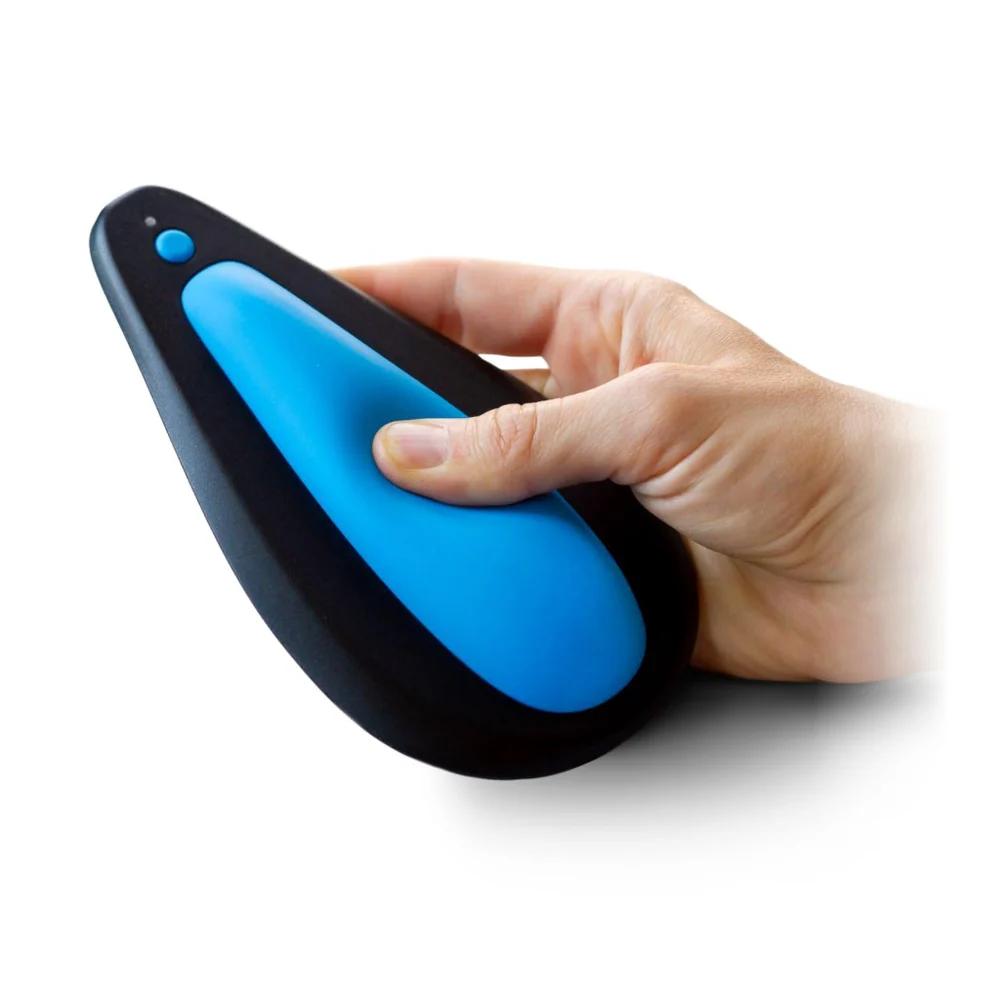
Most men using biofeedback tools like the kGoal Boost notice better control by 6-12 weeks. As you get stronger, gradually increase hold time and reps.
Exercise 2: Quick Flicks (Your "Emergency Brake")
These are rapid 1-second contractions that train fast, reflexive control. Think of them as your emergency brake—when you feel the "edge" approaching, a quick lift helps you back away from the point of no return.
Pairing quick squeezes with slow holds has shown benefits for premature ejaculation [7].
Benefits of Quick Flicks
- Trains fast reflexive control for "last-second" braking
- Helps during start-stop practice
- Improves stamina
- Improves timing without over-clenching
How to Do Quick Flicks
- Take a normal breath
- Snap-lift your pelvic floor for 1 second
- Relax fully for 1-2 seconds
- Repeat 10 times, keeping abs and glutes quiet
- Finish with one 6-10 second slow hold
You can start with 2-3 mini-sets per session, 3 times daily, and then gradually increase. Many men notice better emergency control within 4-8 weeks, especially when combining quick flicks with start-stop techniques during sex. Try to track your "edging time" to see progress.
Expert Note: Keep in mind that quick flicks teach on-demand activation without wasting energy tensing your whole body during sex.
Exercise 3: Reverse Kegels + 360° Breathing (Relax to Last Longer)
Not all problematic pelvic floors are weak; some are overly tight. This is called hypertonicity: your pelvic floor muscles stay partially clenched even when they should be relaxed. If you feel pelvic aching during arousal or always seem to start sex already close to the edge, hypertonicity is likely the issue.
Reverse Kegels help lengthen your pelvic floor muscles and reduce this chronic tension. By lowering your baseline tone, you create more "distance" between your resting state and the point of no return, giving you more room to work with during sex [8].
Relaxation-focused pelvic floor therapy is also called Down Training. kGoal Boost is designed for both strengthening exercises and Down Training, providing workout guidance, exercise tracking, and games to help you build consistent routines.
Note that the muscle changes during reverse Kegels specifically are subtle—often below real-time biofeedback sensing thresholds—so focus on the structured guidance and tracking rather than expecting moment-to-moment feedback during the relaxation movement itself.
Deep diaphragmatic breathing lowers your stress response, which naturally helps extend your stamina, and pairs well with both reverse Kegels and Down Training.
Benefits of Reverse Kegels
- Lengthens chronically shortened pelvic floor muscles
- Reduces hypertonicity (constant low-grade clenching)
- Lowers your baseline arousal, so you don't start close to the edge
- Smooths arousal spikes for steadier control
- Decreases stress-driven early ejaculation
How to Do Reverse Kegels
- You can start lying down, progress to sitting, and standing if it's more comfortable
- Place one hand on the belly, one on the ribs
- Inhale through your nose and let your perineum (the area between your scrotum and anus) “melt down” (don’t push)
- Exhale and add a gentle 20-30% lift
- Repeat 6-8 cycles
To relax your pelvic floor, spend 5 minutes, 1-2 times daily. Many men feel less "on edge" by 2-4 weeks, with steadier arousal control by 6-12 weeks. This works especially well combined with start-stop practice during sex.
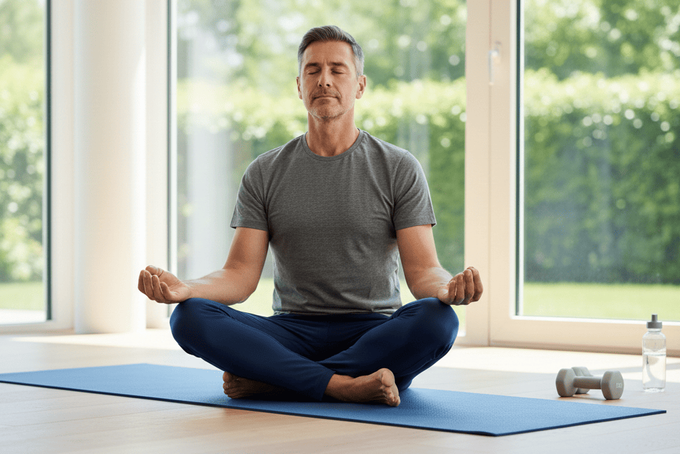
Exercise 4: Biofeedback-Guided Kegels (Clinic or Home Sensor)
Real-time biofeedback from sensors can help you connect with your pelvic floor muscles (which are invisible / hidden inside your body), to speed learning and prevent common mistakes.
Keep note that men doing pelvic floor training with biofeedback had better outcomes than those without [9]. With these sensors, you'll know you're using the right muscles at the right intensity—not just guessing.
Benefits of Doing Biofeedback-Guided Kegels
- Confirms correct technique immediately
- Prevents wasted effort on the wrong muscles
- Speeds the learning curve significantly
- Provides objective progress tracking
How to Do Biofeedback-Guided Kegels
- Work with a pelvic floor physical therapist or use a home sensor like kGoal Boost
- Follow the guided workout routines in the app rather than trying to count reps manually
- Watch the feedback stay smooth while breathing easily
Aim for weekly guided sessions plus daily home work for 8-12 weeks.
Track Your Progress With kGoal Boost
Unlike products that only show visual feedback on a screen, kGoal Boost provides both tactile and visual biofeedback, so, you'll feel and see when you're engaging the right muscles.
The app measures your pelvic floor strength, provides guided and gamified workout routines that keep practice from getting boring, and delivers personalized workout plans that adapt as you improve.
This solves the biggest barrier to pelvic floor training: adherence. Most men quit manual Kegel routines because counting reps gets tedious—Boost's games and structured programs keep you consistent.
Expert Note: With biofeedback, you can track and record your Kegel exercise performance to share with your doctor or physical therapist.
Exercise 5: Bridges With Light Kegels at the Top
Glute bridges strengthen your glutes and hip extensors (the muscles that drive your hips forward) while your core and pelvic floor share the load. Adding a gentle pelvic lift at the top reinforces the coordination between these muscle groups without over-clenching.
Programs pairing functional strengthening with pelvic floor work have improved sexual function and control in men with premature ejaculation [10].
Benefits of the Bridge With a Light Kegel
- Shares work between the glutes and the pelvic floor
- Prevents breath-holding that spikes arousal
- Improves thrust mechanics and rhythm
How to Do Bridges With Light Kegels
- Lie on your back with knees bent, feet hip-width apart
- Inhale and relax your pelvic floor completely
- Exhale, press through heels, and lift hips to form a straight line
- At the top, add a 20-30% pelvic floor lift for 3-5 seconds
- Lower and fully relax on the next inhale
- Keep ribs heavy, don't arch your lower back
You can start with 2-3 sets of 8-12 reps, 3-4 days per week. Do these separately from your other Kegel exercises, and don't stack them all on the same day.
Expect smoother movement and fewer breath-holds by 4–8 weeks. Sexual stamina improvements typically show by 8–12 weeks when this is part of your full routine. Stronger glutes mean less energy wasted and better pacing during sex.
Exercise 6: Core + Pelvic Floor Combo ("Dead Bug" With Exhale-Lift)
This exercise coordinates your deep core muscles with your pelvic floor for steadier trunk control and calmer arousal. Moving the opposite arm and leg while exhaling and lifting prevents breath-holding and butt-bracing that spike arousal.
This type of coordination supports timing without clenching everything [11].
Benefits of the Core + Pelvic Floor Combo
- Improves coordination during movement
- Reduces breath-holding and over-bracing
- Steadies thrust rhythm and timing
- Decreases lower back and hip tightness
How to Do the Core + Pelvic Floor Combo
- Lie on your back with arms up, hips and knees at 90 degrees
- Exhale and gently lift the pelvic floor to 30% while extending the opposite arm and leg
- Keep ribs heavy and lower back quiet
- Inhale and fully relax the pelvic floor as you return to the start position
- Switch sides and repeat
You can start by performing 2-3 sets of 6-10 controlled reps per side, 3-4 days per week. Pair each rep with an exhale-lift and inhale-relax so the pattern becomes automatic.
Your core timing changes will show up within 4 weeks. Stamina improvements typically appear by 4-8 weeks when combined with your other Kegel exercises and start-stop practice during sex.
Note that better core control means easier position changes, smoother transitions, and less soreness after sex.
When to See a Pelvic Floor Physical Therapist
While these exercises work for many men, some situations need professional guidance. You should see a pelvic floor physical therapist if:
- You've tried exercises for 8-12 weeks without improvement
- You feel pain during exercises or ejaculation
- You're recovering from prostate surgery or radiation
- You have chronic pelvic pain or feel constantly "clenched"
- You're unsure if you're engaging the right muscles
- You have severe premature ejaculation with other symptoms
- You experience numbness or loss of sensation in the pelvic area
A pelvic floor physical therapist can assess whether your muscles need strengthening, relaxation (Down Training), or both. They create a customized plan and use clinical-grade biofeedback to ensure proper technique.
Many men work with a therapist initially to learn the correct form, then maintain progress at home with exercises and devices like the kGoal Boost.
Moving Forward to Better Sexual Stamina
Improving sexual stamina through pelvic floor training takes consistency, but most men notice changes within 6-12 weeks. You should start with slow Kegels and quick flicks, add breathing and relaxation if you tend to stay tense, then layer in bridges and dead bugs for functional strength. Track simple measures like time before ejaculation and how often you successfully use the "emergency brake" during sex.
Remember that pelvic floor health isn't just about sexual performance; stronger muscles mean better bladder control, less pain, and improved core stability. With these Kegel exercises, you're investing in long-term health, not just a quick fix.
Take Control Back
Train your pelvic floor with kGoal’s guided biofeedback to build strength and timing for longer, firmer performance.
References
1. Bates, J. N., Pastuszak, A. W., & Khera, M. (2019, January 19). Effect of body weight on sexual function in men and women. https://pmc.ncbi.nlm.nih.gov/articles/PMC6771291/
2. Urology & Continence Care Today - Article: Effects of chronic cough on urinary incontinence ucct. (n.d.). https://www.ucc-today.com/journals/issue/launch-edition/article/effects-of-chronic-cough-on-urinary-incontinence-ucct
3. Hypertonic pelvic floor. (2025, September 9). Cleveland Clinic. https://my.clevelandclinic.org/health/diseases/22870-hypertonic-pelvic-floor
4. Pastore, A. L., Palleschi, G., Fuschi, A., Maggioni, C., Rago, R., Zucchi, A., Costantini, E., & Carbone, A. (2014). Pelvic floor muscle rehabilitation for patients with lifelong premature ejaculation: a novel therapeutic approach. Therapeutic Advances in Urology, 6(3), 83–88. https://doi.org/10.1177/1756287214523329
5. Pelvic floor dysfunction. (2025, September 9). Cleveland Clinic. https://my.clevelandclinic.org/health/diseases/14459-pelvic-floor-dysfunction
6. Lyu, Y., Gong, J., He, H., Xu, H., Dong, H., & Duan, Y. (2025). Differential efficacy of pelvic floor muscle training in primary versus acquired premature ejaculation: an 8-week comparative study using non-invasive biomechanical assessment. Sexual Medicine, 13(5), qfaf081. https://doi.org/10.1093/sexmed/qfaf081
7. Yani, M. S., Eckel, S. P., Kirages, D. J., Rodriguez, L. V., Corcos, D. M., & Kutch, J. J. (2022). Impaired ability to relax pelvic floor muscles in men with Chronic Prostatitis/Chronic Pelvic Pain syndrome. Physical Therapy, 102(7). https://doi.org/10.1093/ptj/pzac059
8. Pelvic floor exercises. (n.d.). Physiopedia. https://www.physio-pedia.com/Pelvic_Floor_Exercises
9. Myers, C., & Smith, M. (2019). Pelvic floor muscle training improves erectile dysfunction and premature ejaculation: a systematic review. Physiotherapy, 105(2), 235–243. https://doi.org/10.1016/j.physio.2019.01.002
10. Choudhary, M. (2025, September 28). 7 Critical Exercises to Rebuild your Pelvic Floor. Ask Your Physio. https://askyourphysio.com/7-critical-exercises-to-rebuild-your-pelvic-floor/
Disclaimer: This article is for informational purposes only and is not intended as medical advice. Always consult a qualified healthcare provider before starting any new treatment or if you experience persistent bladder symptoms.
FAQs
How long does it take for Kegel exercises to improve sexual stamina?
Most men notice initial improvements within 6-8 weeks of consistent daily practice, with maximum benefits by 12-16 weeks. Studies show men with premature ejaculation increased their time before ejaculation by 3-4 times after 12 weeks of structured training. Consistency matters more than intensity.
Can Kegel exercises help with both premature ejaculation and erectile dysfunction?
Yes, because the same muscles control blood flow and ejaculation timing. Randomized trials show pelvic floor training improves erectile function, and reviews confirm benefits for premature ejaculation. Men often see improvements in both areas simultaneously.
Should I do strengthening or relaxation exercises first?
If you feel pelvic ache, pain during ejaculation, or constant tension, start with relaxation exercises for 2-4 weeks before strengthening. If you have a clear weakness like losing firmness quickly, begin with slow Kegels and quick flicks. A pelvic floor physical therapist can assess your specific needs.
How do I know if I'm doing Kegel exercises correctly?
You should feel an upward and inward lift, not outward pressure. Your abs, thighs, and buttocks should stay relaxed while breathing normally. Try the finger insertion test: insert a lubricated finger about 2 inches into your rectum and squeeze—you should feel tightening inward, not pushing outward. Biofeedback devices provide the most reliable confirmation.
Can these exercises replace medical treatment for sexual dysfunction?
Pelvic floor exercises are effective but aren't a replacement for medical evaluation. Severe erectile dysfunction, premature ejaculation with underlying medical causes, or symptoms after prostate treatment should be evaluated by a urologist. Pelvic floor training works best as part of a complete treatment plan.