Double Voiding: The Technique That Fixes Incomplete Bladder Emptying
Double voiding is a simple two-step technique where you urinate, wait 20-30 seconds while seated, then try again to fully empty your bladder. This prevents UTIs and bladder stones and protects long-term bladder health by eliminating residual urine.




Updated September 15, 2026
It's not uncommon to feel like your bladder isn't quite empty after using the bathroom. That frustrating "still-full" sensation is one of the clearest signs of incomplete bladder emptying, and it's more common than most people realize.
The good news is there's a simple technique that can help, and it doesn't require any special equipment or a trip to the doctor to get started. It's called double voiding, and it works by giving your bladder a second chance to finish the job.
This article covers what double voiding is, why it works, and how to practice it correctly, whether you're dealing with incomplete emptying or you just want to be proactive about your pelvic floor health.
A quick note before diving in: this information is meant to educate, not replace professional medical advice. If you're experiencing persistent bladder symptoms, check in with a healthcare provider.

Take Control of Your Bladder
kGoal Boost's smart biofeedback helps you master pelvic floor relaxation and strengthening.
What Is Double Voiding?
Let's answer the most basic question first: what is double voiding?
First, you urinate normally while seated, sitting upright and leaning slightly forward. Then, once you're done, you stay seated and relaxed for about 20 to 30 seconds and try to go again. That second attempt gives your detrusor muscle (the muscular wall of the bladder) a chance at a second contraction, pushing out whatever urine was left behind the first time.
The whole double voiding meaning comes down to that second attempt itself. You're not rushing off the toilet the moment the stream stops.
Cambridge University Hospitals notes that this approach works especially well for people who feel like their bladder isn't empty, or who find themselves back in the bathroom minutes after they just went [1]. Think of it as a quick, low-effort workout for your bladder muscles.
4 Signs You're Not Emptying Your Bladder Completely
If you've never put a name to that "still full" feeling, here's what incomplete bladder emptying typically looks like in day-to-day life:
- A lingering sense of fullness right after you've gone
- Needing the bathroom again just 20 to 30 minutes later
- A weak, slow, or interrupted urine stream
- Recurrent urinary tract infections without an obvious cause
Wondering how to fully empty your female bladder specifically? The mechanics are the same for everyone, but women dealing with pelvic organ prolapse or postpartum pelvic floor changes tend to notice these signs more often, since a shifted bladder position can make complete emptying harder to achieve naturally.
4 Risks of Chronic Incomplete Emptying
Leftover urine isn't just uncomfortable. Think of your bladder like a water bowl: fresh water flowing through stays clean, but pockets of standing water become a breeding ground for bacteria and crystals.
Over time, chronic residual urine can lead to some serious issues [2]:
- Urinary tract infections (UTIs): Bacteria that linger in leftover urine have the perfect environment to multiply.
- Bladder stones: Stagnant urine allows crystals to form and accumulate.
- Weakened bladder muscles: Long-term incomplete emptying can stretch and weaken your bladder wall, making the problem worse.
- Decreased bladder control: These issues compound over time and can permanently affect your continence.
5 Easy Steps to Double Void Correctly
Double voiding works for everyone, men and women alike, though the setup differs slightly depending on habit. Men typically stand to urinate day to day, but sitting down is actually the recommended posture for this particular technique.
Sitting allows for better pelvic floor relaxation, a more favorable bladder angle, and an easier wait for that second void. Many men managing prostate issues or incomplete bladder emptying find that sitting helps them drain more completely than standing does.
Here's how to do the double voiding technique correctly:
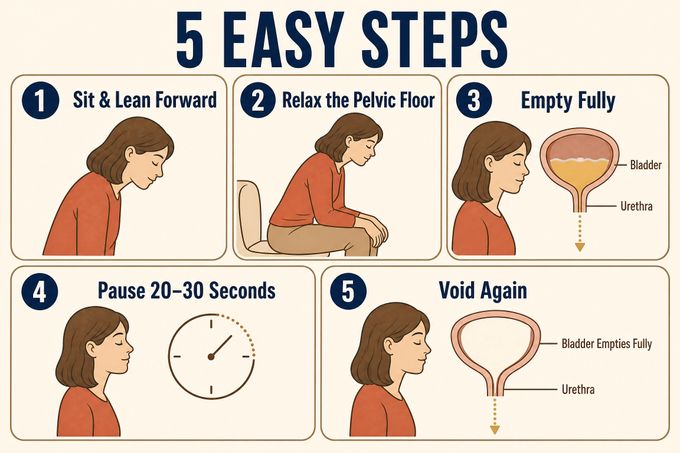
Step 1: Sit Comfortably and Lean Forward
Sit fully on the toilet with your feet flat on the floor, slightly wider than shoulder-width apart. Your knees should ideally be higher than your hips, so use a footstool if needed. Lean your torso slightly forward with your hands resting on your knees. This posture aligns your bladder outlet and helps relax your pelvic floor.
Step 2: Relax Your Pelvic Floor
Take a deep breath and consciously relax your pelvic floor muscles. Let the urine flow naturally without straining or pushing.
Step 3: Empty as Fully as Possible
Continue to void until the flow stops on its own. Experimenting with position can help here. Leaning slightly further forward or gently rocking side to side sometimes makes a difference.
Step 4: Pause for 20 to 30 Seconds
Once the first flow ends, stay seated. Keep your pelvic floor relaxed and breathe calmly during this pause. It matters more than it might seem.
Step 5: Attempt to Void Again
Lean forward a bit more if needed, then gently try to urinate again. Even a trickle or a few drops count. This second pass flushes out leftover urine and gives you a rough sense of how much typically remains. The key throughout is keeping your pelvic floor relaxed, not straining.
Is Double Voiding Bad? The Risks and Benefits
The short answer is no.
When done correctly, double voiding is protective, not harmful. Like most techniques, though, doing it incorrectly can cause its own problems.
The Benefits of Double Voiding
Let's start with the positives:
Short-Term Gains
Short-term, many people notice relief almost right away. Less urgency, fewer bathroom trips, and that anxious "still-full" feeling tends to fade or disappear entirely once each visit is draining more completely.
Long-Term Improvements
Long-term, the payoff is bigger. Double voiding helps both men and women dealing with incomplete bladder emptying. It's particularly useful for older men with prostate obstruction and women with pelvic organ prolapse.
With consistent practice over weeks to months, it meaningfully reduces residual urine and UTI risk. Research on the technique has shown lower rates of bladder bacteria among people who use it regularly [3].
By heading off chronic urine retention, it also protects against bladder overstretch and muscle damage. Fully emptying the bladder every three to four hours helps guard against both infection and kidney strain.
3 Ways Double Voiding Can Backfire
The risks are limited, but worth knowing:
- Straining instead of relaxing: Some people accidentally force the second void by bearing down rather than staying relaxed. This can injure the pelvic floor and worsen voiding problems over time. Repeated bearing down can even contribute to pelvic organ prolapse.
- Reinforcing frequent voiding habits: Practicing double voiding constantly, even when it isn't needed, can train the bladder to signal urgency more often than it should.
- Delaying medical care: Leaning entirely on double voiding to manage symptoms can delay a proper workup for a more serious underlying cause, like obstruction or a neurological condition.
» Learn how Kegels may improve weak bladders.
Double Voiding for Overactive Bladder and Overactive Pelvic Floor
Double voiding techniques can help with an overactive bladder and an overactive pelvic floor, but they usually need a few modifications first.
If you have an overactive or tight pelvic floor, incorporate extra relaxation exercises before double voiding to make sure your muscles truly release. Gentle yoga poses like child's pose or a supported squat between voids can help lengthen the pelvic floor, and deep diaphragmatic breathing is especially useful here. Try imagining your pelvic floor and lower abdomen relaxing and opening as you void.
For pelvic organ prolapse specifically, a higher footstool or leaning further forward can reduce downward pressure and make emptying easier. People managing neurological conditions like MS or a spinal injury may need to pair double voiding with a timed voiding schedule. If mobility is limited, alternating sitting positions or rocking side to side can help shift residual urine.
It's also worth noting that bladder leaks that show up specifically during exercise are a different issue than incomplete emptying. Our guide on avoiding bladder leakage while running covers that scenario in more detail.
How Often Should You Practice Double Voiding?
Double voiding isn't a separate trip to the bathroom. It's an extra step you add when you're already going. You don't need to do it every single time to see results, but the more consistently you practice, the more noticeable the improvement in bladder control tends to be.
4 Best Times to Practice Double Voiding
It tends to be most useful:
- In the mornings: Your bladder is usually fullest after a night of not urinating.
- Before bedtime: Since heading into the night with an empty bladder helps.
- After drinking a lot of fluids: Drinking a lot within a short window means there's simply more volume to clear.
- When symptoms flare up: This is an extra step during a rough stretch, when you have symptoms like urgency or that still-full feeling.
Many people notice relief within a few days of consistent practice, with frequency and urgency dropping over time. More measurable changes, like fewer UTIs or a stronger stream, typically show up within a few weeks.
Is This Something You Can Do Long-Term?
Absolutely. Some people keep it up indefinitely as routine maintenance, while others treat it as a transitional tool while they work on pelvic floor strength and coordination elsewhere.
Either approach is fine. The goal is rehabilitating the bladder-pelvic-floor relationship enough that the extra step eventually becomes unnecessary, though there's no harm in sticking with it if it keeps helping.
Complementary Double Voiding Exercises and Tools
Double voiding works even better when combined with other practices.
Supporting Exercises
Diaphragmatic breathing is especially effective here. This involves taking slow, relaxed breaths while imagining the pelvic floor opening during voiding, which can make the second attempt easier. Our full diaphragmatic breathing guide for pelvic floor relaxation walks through the technique in detail.
Gentle pelvic tilts, supported squats, or forward bends before or after voiding can also help release tension.
Helpful Tools
This is also where a tool like kGoal Boost for men or kGoal Boost for women can help, used as a separate practice session, not during urination itself. It's a sit-on-top, clothes-on device that gives real-time tactile and visual biofeedback on pelvic floor contraction and relaxation. So instead of guessing whether the muscles are actually letting go, there's a clear signal confirming it.
A few minutes of that kind of practice a day, over the course of the days or weeks spent building the double voiding habit, trains the same relaxation skill needed for that pause before the second void. The "invisible" work of releasing the pelvic floor becomes something felt and tracked during training, then carried over naturally into the bathroom. Biofeedback-assisted training in general has been linked to real improvements in urinary flow rate, bladder capacity, and voiding efficiency [4].
When Double Voiding Doesn't Work
Double voiding is safe and effective for most people, but certain warning signs mean it's time to stop self-managing.
7 Signs You Should See a Doctor Instead
Visit a healthcare provider if you experience any of the following:
- Persistent incomplete bladder emptying despite proper technique
- Frequent UTIs, even with consistent double voiding
- Blood in your urine
- Severe pain or pressure during urination
- A bladder scan consistently showing large residual volumes (over 100 mL)
- Worsening urgency or frequency
- New pelvic pain or neurological changes
Don't hesitate to reach out to a pelvic floor physical therapist or urologist if you're dealing with ongoing symptoms. They can measure your post-void residuals, run specialized testing, and rule out more serious causes like obstruction or neurological disease.
Sometimes medications, pessaries, or other interventions are needed alongside behavioral techniques like this one.
The Bottom Line: Does Double Voiding Actually Work?
Double voiding works best as one piece of a broader bladder health routine, not a stand-alone fix. Staying well-hydrated throughout the day (rather than drinking fluids all at once) helps, and so does cutting back on bladder irritants like excessive caffeine and alcohol. Staying regular with bowel habits matters too, since constipation can put pressure on the bladder and worsen residual urine buildup.
Incomplete bladder emptying doesn't have to be a permanent state. With the right technique, some consistency, and support from a professional when symptoms call for it, most people can protect their bladder health and get back to feeling fully empty.
If a pelvic floor physical therapist hasn't been part of the conversation yet, they're often the most useful next call. kGoal's biofeedback tools can support that work at home between visits, whether that's practicing double voiding with more confidence or building broader pelvic floor awareness with kGoal Boost.
Stop Guessing, Start Training
Learn proper pelvic floor technique with real-time biofeedback. kGoal Boost shows you exactly when you're contracting and relaxing.
References
1. Cambridge University Hospitals. (n.d.). Bladder care and management. https://www.cuh.nhs.uk/patient-information/bladder-care-and-management/
2. Cleveland Clinic. (2025, June 2). Urinary retention. https://my.clevelandclinic.org/health/diseases/15427-urinary-retention
3. Zomorrodi, A., & Bohluli, A. (2007). Double urinary bladder voiding technique post removal of urethral catheter in renal allograft recipients. Saudi Journal of Kidney Diseases and Transplantation, 18(4), 532–535. https://pubmed.ncbi.nlm.nih.gov/17951938/
4. Chiang, C.-H., Jiang, Y.-H., & Kuo, H.-C. (2021). Therapeutic efficacy of biofeedback pelvic floor muscle exercise in women with dysfunctional voiding. Scientific Reports, 11(1), 13757. https://doi.org/10.1038/s41598-021-93283-9
Disclaimer: This article is for informational purposes only and is not intended as medical advice. Double voiding is a self-management technique, not a treatment for underlying conditions like urinary obstruction, neurological disease, or infection. Always consult a qualified healthcare provider before starting any new bladder routine, and seek prompt medical attention if you notice blood in your urine, severe pain, or symptoms that worsen despite consistent practice.
FAQs
What is double micturition, and is it the same as double voiding?
Yes. Double micturition is simply the medical term for double voiding. "Micturition" means urination, so both terms describe the same technique of urinating twice in one bathroom visit to fully empty the bladder.
I don't have any symptoms. Should I practice double voiding anyway?
If you're not experiencing incomplete emptying, urgency, or frequent UTIs, you probably don't need to do this every time. Practicing it occasionally, like once or twice a day, can still support overall bladder health. Just don't let it turn into an anxious or obsessive habit.
How can I tell if my bladder is truly empty?
The gold standard is a post-void residual (PVR) scan, done with an ultrasound machine at your doctor's office, right after you urinate. A normal PVR is under 100 mL. As a rough gut check, feeling a strong urge to go again within 30 to 60 minutes is a sign of incomplete emptying worth mentioning to a provider.
Does bladder training conflict with double voiding?
Not at all. Bladder training (gradually stretching the time between bathroom visits) and double voiding work well together. One reduces urgency and frequency; the other makes sure each visit actually drains the bladder. Pairing both with pelvic floor muscle training tends to work best.
Does double voiding work for men, or is it just for women?
It absolutely works for men, especially those managing prostate issues like BPH, recovery after prostate surgery, or anyone dealing with incomplete emptying. Even though most men stand day to day, sitting is recommended specifically for this technique, since it supports better pelvic floor relaxation and makes that second void easier to manage.
Is it normal to pee twice without trying to?
It depends on whether it's deliberate. If you've ever wondered, "Why do I pee twice without meaning to?" the answer usually comes down to whether it's controlled or involuntary. Urine splitting into two separate streams on its own, or a small second release happening with no conscious effort, can point to an obstruction or pelvic floor issue worth mentioning to a doctor. That's different from the deliberate double voiding technique described here, which is a controlled, two-step habit, not an involuntary split stream.