6 Expert Tips to Stop Adult Bed-Wetting: Improving Pelvic Floor Muscles
Adult bed-wetting is often caused by weak or uncoordinated pelvic floor muscles. There are six expert-backed methods to strengthen your pelvic floor and permanently stop nighttime leaks.




Published January 3, 2026
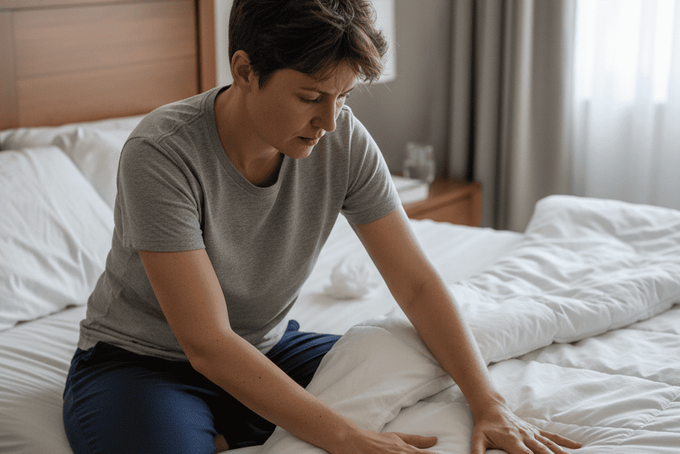
Waking up to wet sheets as an adult is frustrating and isolating. You might feel like you're the only one dealing with this, but nocturnal enuresis affects millions of people. Here's what many don't realize, though: your pelvic floor often plays a central role in nighttime bladder control.
Adult bed-wetting can have other causes as well, like hormonal imbalances, sleep disorders, and structural issues, but pelvic floor dysfunction frequently contributes to or worsens the problem. When these muscles can't contract or relax properly, urinary leakage follows day and night.
In this article, we'll go over six evidence-backed methods to help stop adult bed-wetting by targeting pelvic floor strength and coordination. From high-tech biofeedback devices to mindful breathing, these approaches address the root cause, making improvement absolutely possible.

Sleep Dry and Confident
Use kGoal’s biofeedback to strengthen and coordinate your pelvic floor muscles for better nighttime bladder control.
What Causes Adults to Wet the Bed?
Unlike childhood bed-wetting, adult cases usually stem from specific physiological changes [1]:
- Overactive bladder: 70-80% of adults with nocturnal enuresis have detrusor muscle overactivity, which is where the bladder contracts involuntarily at night [2].
- Weak or uncoordinated pelvic floor muscles: When these muscles can't properly support your bladder or respond to signals, leakage happens. Look for daytime symptoms too: leaking when you run or cough or sneeze, frequent urination, difficulty starting or stopping your stream, or chronic constipation.
- Structural issues: For men, an enlarged prostate can cause problems. For women, pelvic organ prolapse or previous surgeries can impair bladder function.
- Sleep disorders: Obstructive sleep apnea causes such deep sleep that bladder signals don't wake you.
- Hormonal imbalances: Insufficient antidiuretic hormone (ADH) at night leads to excessive urination.
- Lifestyle factors: Too much evening fluid (especially alcohol or caffeine), certain medications, or chronic constipation can trigger nighttime leakage.
If you experience daytime leaking, frequent urination, pelvic pain, or difficulty controlling your stream alongside bed-wetting, your pelvic floor is likely involved. The tips below help you target this root cause.
6 Tips to Improve Your Pelvic Floor and Stop Bed-Wetting
1. Master Pelvic Floor Muscle Training (Kegel Exercises)
Kegel exercises are simple contractions that you can do without expert help. Try to imagine stopping urine midstream or preventing gas from escaping. You squeeze and lift those muscles, hold for 5-10 seconds, then release.
Research showed that pelvic floor muscle training can significantly reduce leakage, with about a 92% chance of helping [3].
How to Do Them Correctly
- For women: Imagine picking up a blueberry with your vagina. You should feel a gentle lift and squeeze internally. Your belly, butt, and thighs should stay relaxed.
- For men: Focus on the area between your scrotum and anus. Lift your penis and testicles without tensing your buttocks or thighs.
Breathe normally. If you're doing it right, no one watching should be able to tell you're exercising.
How to Ensure You're Using the Proper Technique
If you're wondering whether your technique is wrong, kGoal tools give you real-time biofeedback during Kegel exercises through an interactive app and through the devices themselves, which offer tactile/vibrational feedback you can actually feel.
This dual feedback system is a significant advantage over products that only provide visual cues through their apps. You get both what you see on screen and what you physically feel, making it easier to learn proper technique.
You perform pelvic contractions while watching pressure graphs that show exactly what your muscles are doing, so you'll know if you're on the right track. It's just like having a personal trainer for your pelvic floor.
Men and women both can use the kGoal Boost, which works externally. You sit on it, and it measures pelvic floor activity through your clothing. This is especially helpful for women recovering from childbirth, men after prostate surgery, and anyone who's never done Kegels correctly. Women can also use the kGoal Classic option, which is an intravaginal device.
Timeline and Benefits
Subtle improvements often appear in 4-6 weeks. As for dramatic gains, they typically show up by 3-4 months. Aside from fewer nighttime incidents, other benefits you'll notice include better daytime control, stronger core muscles, and improved sexual function.
Expert Note: If you have very tight pelvic floor muscles (causing pelvic pain), doing more Kegels makes things worse. You'll need relaxation techniques instead.
Also, don't use the internal device if you have overly tight pelvic floor muscles (indicated by pelvic pain), active infections, or recent surgery.
2. Work With a Pelvic Floor Physical Therapist
Pelvic floor physical therapy is one-on-one rehabilitation with a specially trained therapist.
They do a detailed exam (internal for women, sometimes rectal for men) to assess your specific muscle issues, then create a customized treatment plan including pelvic floor exercise, proper breathing techniques, core exercises, and hip stretches.
Who Should Work With a Therapist
Working with a pelvic floor physical therapist is never a bad idea, for anyone with pelvic floor dysfunction. However, it can be especially ideal if your bed-wetting is caused by weakness after childbirth (women), recovery from prostate surgery (men), neurological conditions, mixed symptoms (both weakness and tightness), or pelvic pain alongside urinary incontinence.
Timeline and Benefits
Some improvement typically shows up in 4-8 weeks, with significant gains by 3-6 months. Cleveland Clinic experts note that pelvic floor physical therapy can significantly improve quality of life [7]. Benefits include reduced pelvic pain, less constipation, better sexual function, and stronger core stability.
Expert Note: You should avoid this method temporarily if you have an active pelvic infection, open wounds, or have just had surgery. Wait for your doctor's clearance.
3. Consider Electrical Stimulation as an Adjunct Therapy
Electrical stimulation (e-stim) uses a probe that delivers a mild electric current to make your pelvic muscles contract automatically. While research shows it's not necessarily better than active exercises, it can help when you can't contract muscles on your own [4].
Who Should Use It
It's most useful if you can't feel or contract your pelvic floor at all due to nerve damage or severe weakness [6]. It's also a good option if you experience too much pain to do active exercises or have recently had surgery.
- For men: E-stim after prostate surgery helps "wake up" pelvic floor muscles. Your therapist might use rectal probes or external electrode pads.
- For women: Vaginal e-stim probes are most common and are particularly helpful postpartum.
Timeline and Benefits
Over 8-12 weeks of 2-3 sessions weekly, you should develop stronger voluntary control and notice better nighttime bladder control.
Expert Note: Don't use e-stim if you're pregnant, have a pacemaker, have metal implants in your pelvis, or have an active pelvic infection.
4. Explore Medication Options for Nighttime Control
Medications can reduce nighttime urine production or calm an overactive bladder. They work best when combined with behavioral techniques like bladder training or moisture alarms, though some people find success with medication alone.
Who Should Use It
Medications are worth considering if behavioral methods haven't worked after 3-6 months, if you need a quick short-term solution (like for sleepovers or travel), or if testing shows specific issues like low nighttime vasopressin levels or bladder overactivity.
- Desmopressin: Mimics your body's natural hormone that tells the kidneys to produce less urine at night. Works for about 50% of users, especially those with normal bladder capacity. Limit evening fluids since it can affect sodium levels.
- Oxybutynin or Tolterodine: Reduce bladder muscle contractions if you have an overactive bladder. Particularly helpful if you wet multiple times per night or also experience daytime urgency.
- Imipramine: Works on brain signals to the bladder, preventing bedwetting in roughly 40% of cases. Your doctor will discuss potential drug interactions and side effects.
- Solifenacin: A newer anticholinergic that blocks nerve signals causing bladder overactivity, with fewer side effects than older medications in this class.
- Trospium Chloride: Relaxes the bladder by blocking receptors on the bladder wall that trigger contractions.
Timeline and Benefits
Most medications show results within 1-2 weeks. Desmopressin provides immediate relief on nights you take it, while anticholinergics may take a few days to reach full effectiveness. Many people can gradually reduce dosage after 3-6 months of dry nights.
Expert Note: Always work with a healthcare provider to find the right medication and dosage. Some medications require monitoring (like sodium levels with desmopressin), and stopping suddenly can cause bedwetting to return. Never combine medications without medical supervision.

5. Practice Bladder Training (Timed and Double Voiding)
Bladder training means following a fixed bathroom schedule instead of just going whenever you feel the urge. This is a simple method you can try at home.
You'll need to start by urinating every 2 hours by the clock, then gradually stretch to every 3, then 4 hours. Research shows bladder training significantly reduces incontinence episodes and urgency [5].
You can also try double voiding—a technique where you urinate, wait a moment, then try to empty your bladder again. This helps ensure your bladder empties completely, which can reduce leakage and urgency between bathroom trips.
Who Should Try It
It works well for anyone who goes to the bathroom very frequently (more than 8 times daily). It's also good for you if you get an urgent need to urinate or have overactive bladder symptoms. This method works well for men and women.
Timeline and Benefits
Most people see improvement within 6-12 weeks. When urges hit between scheduled times, use strategies to calm them: deep breathing, quick Kegels, distraction techniques, or standing still until the urge passes.
Aside from fewer nighttime episodes, you'll also notice better sleep and more freedom during the day.
Expert Note: Skip this if you have an active urinary tract infection. If you have an enlarged prostate or other condition causing urinary retention, talk to your doctor first—they may recommend double voiding specifically while adjusting the timed voiding schedule.
6. Try Yoga and Mindful Breathing
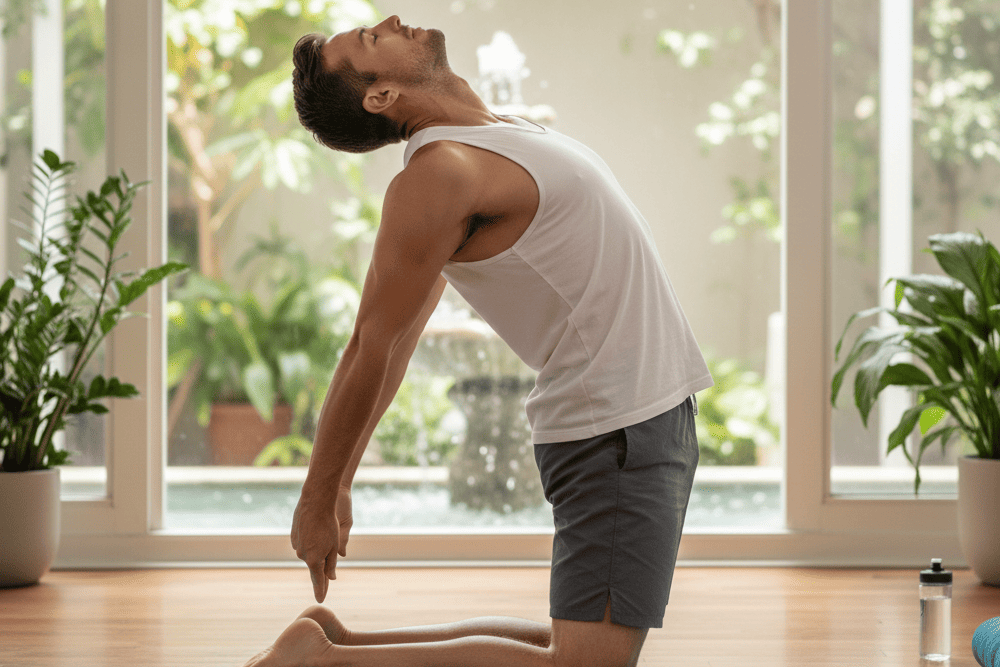
Yoga combines gentle poses and deep breathing to strengthen your core and relax your pelvic floor while reducing stress. Specific poses like the bridge pose, child's pose, and modified squats gently engage the muscles supporting your bladder.
A Stanford study showed that a 12-week low-impact yoga program led participants to cut urinary leak episodes by about 60% [7].
Who Should Try It
It's especially helpful if you prefer non-medical approaches, notice symptoms worsen with stress, or are looking for particularly low-impact exercise. Yoga works equally well for men and women.
Timeline and Benefits
You will definitely notice fewer leaks and expect better overall well-being. Aside from this, there is also reduced anxiety, improved flexibility, and better sleep quality.
Expert Note: Generally, this is very low-risk. If you have severe joint problems, recent fractures, or certain heart conditions, modify poses or check with your doctor first.
Can You Stop Bedwetting?
Adult bed-wetting doesn't have to be permanent. Most people see meaningful progress within 8-12 weeks of consistent pelvic floor rehabilitation. Remember that small wins matter, and waking up dry even once or twice a week is real progress worth celebrating.
If progress stalls, reassess your technique with biofeedback or a pelvic floor therapist. Sometimes the issue is doing exercises incorrectly, having overly tight muscles, or dealing with other problems like sleep apnea or constipation that need addressing first.
Wake Up Dry Again
Master Kegels with kGoal and strengthen your pelvic floor to stop nighttime leaks.
References
Bedwetting. (2025, August 26). Cleveland Clinic. https://my.clevelandclinic.org/health/diseases/15075-bedwetting
Mutchler, C. (2025, October 12). Adult bedwetting causes and solutions. Verywell Health. https://www.verywellhealth.com/adult-bedwetting-5216129
Marcellou, E. G., Stasi, S., Giannopapas, V., Bø, K., Bakalidou, D., Konstadoulakis, M., & Papathanasiou, G. (2024). Effect of pelvic floor muscle training on urinary incontinence symptoms in postmenopausal women: A systematic review and meta-analysis. European Journal of Obstetrics & Gynecology and Reproductive Biology, 304, 134–140. https://doi.org/10.1016/j.ejogrb.2024.11.040
Sarmento, A. L. C., Sá, B. S., Vasconcelos, A. G., Arcanjo, D. D. R., Durazzo, A., Lucarini, M., De Souza De Almeida Leite, J. R., Sousa, H. A., & Kückelhaus, S. a. S. (2022). Perspectives on the therapeutic Effects of pelvic floor electrical stimulation: A Systematic review. International Journal of Environmental Research and Public Health, 19(21), 14035. https://doi.org/10.3390/ijerph192114035
Wallace, S. A., Roe, B., Williams, K., & Palmer, M. (2004). Bladder training for urinary incontinence in adults. Cochrane Database of Systematic Reviews, 2009(1), CD001308. https://doi.org/10.1002/14651858.cd001308.pub2
Hypertonic pelvic floor. (2025, September 9). Cleveland Clinic. https://my.clevelandclinic.org/health/diseases/22870-hypertonic-pelvic-floor
Low-impact yoga and exercise found to help older women manage urinary incontinence. (2025, July 1). News Center. https://med.stanford.edu/news/all-news/2024/09/yoga-exercise-incontinence.html
Bedwetting. (2025, August 26). Cleveland Clinic. https://my.clevelandclinic.org/health/diseases/15075-bedwetting
Disclaimer: This article is for informational purposes only and is not intended as medical advice. Always consult a qualified healthcare provider before starting any new treatment or if you experience persistent bladder symptoms.
FAQs
Can you really stop bed-wetting in 7 days?
Let's be honest: probably not completely. Pelvic floor rehabilitation takes time—usually several months to see full results. However, you might see small improvements within 1-2 weeks with an intensive approach: restricting all fluids 2-3 hours before bed, using a bedwetting alarm, and practicing Kegels 1-2 times daily with a biofeedback device like kGoal. These measures might reduce how often you leak, but complete dryness in a week is unrealistic for most people.
Is there medicine to stop bed-wetting in adults?
Yes, medications can help manage symptoms, though they don't fix the underlying pelvic floor weakness. Your doctor might prescribe desmopressin (reduces nighttime urine production), anticholinergics (calm overactive bladder), or alpha-blockers (help men with enlarged prostate empty their bladder more completely). These can provide temporary relief while you work on strengthening your pelvic floor. Always discuss options with your healthcare provider.
How do I know if my bed-wetting is due to weak pelvic floor muscles?
Look for daytime symptoms alongside nighttime leaking: you leak when you cough, sneeze, or exercise; you feel sudden, urgent needs to urinate; you struggle to start or stop your urine stream; or you deal with chronic constipation. For men, dribbling after urination or a weak stream are clues. For women, pelvic pressure or pain during sex can indicate pelvic floor issues. A pelvic floor physical therapist can confirm whether your muscles are weak, too tight, or uncoordinated.
What if I've been doing Kegels but they're not working?
This is super common. Usually it means: (1) you're not doing them correctly—many people accidentally bear down or squeeze the wrong muscles; (2) your pelvic floor is too tight, not too weak (if you have pelvic pain, more Kegels will make this worse); or (3) you need more challenge or feedback. Consider working with a pelvic floor physical therapist or trying a biofeedback device like kGoal to check your technique.
Will I need to do pelvic floor exercises forever?
Not at the same intensity. Think of it like going to the gym—you build strength over several months, then switch to maintenance mode. Many people strengthen their pelvic floor over 3-6 months of consistent training (3-4 times weekly), then maintain results with occasional exercises (a few times a week). Maintenance is way less intensive than initial training.