8 Signs of Weak Pelvic Floor After Childbirth You Shouldn't Ignore
New mothers often show pelvic floor weakness through urinary leakage, pelvic pressure, pain during sex, back or hip pain, constipation, and diastasis recti. Early pelvic floor training with biofeedback improves strength and symptoms.




Published January 3, 2026

Childbirth is an incredible experience, but it can leave your pelvic floor muscles stretched, weakened, or even injured. Whether you had a vaginal delivery or C-section, pregnancy itself puts significant strain on these muscles. The result can be anything from bladder leaks to pelvic pain to changes in how sex feels.
Now, these issues can crop up because of pelvic floor weakness after childbirth, and it is extremely common, but it's not something you just have to live with. Most symptoms are treatable with the right approach, and catching them early makes all the difference.
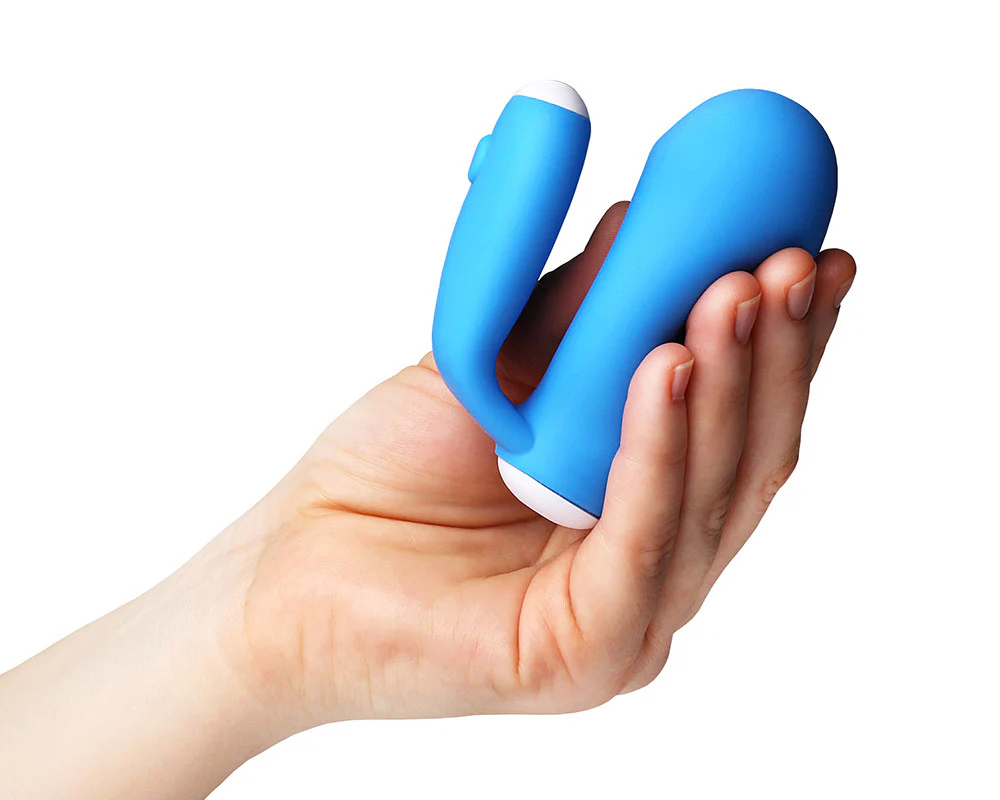
Strengthen Your Pelvic Floor
Use biofeedback tools to do Kegels accurately and strengthen your weak pelvic floor muscles after pregnancy.
What Causes Weak Pelvic Floor Muscles After Childbirth?
Several factors can contribute to pelvic floor weakness:
- Pregnancy itself stretches pelvic muscles and connective tissues. The growing uterus and hormones (like relaxin) loosen pelvic ligaments. Even before delivery, the weight of your baby puts constant pressure on these muscles
- Vaginal delivery stretches and can injure pelvic floor muscles and nerves. One review found a 21-36% incidence of new incontinence after a first vaginal birth, especially with prolonged pushing or instrument-assisted delivery [1]. Nerve stretch (pudendal neuropathy) and episiotomies also contribute
- Hormonal changes during pregnancy weaken collagen and loosen support tissues. Low estrogen during breastfeeding can thin vaginal tissues, affecting both comfort and function
- With a C-section, the abdominal incision can also lead to core muscle separation and scar adhesions that indirectly stress the pelvic floor. A large study found that cesarean delivery actually doubled the odds of chronic pelvic pain compared to vaginal birth [2]
8 Signs of a Weak Pelvic Floor After Childbirth
1. Urinary Incontinence (Leaking When You Cough, Sneeze, or Laugh)
Urinary incontinence or leakage often shows up within the first weeks after birth, as hormones and tissues heal. A meta-analysis found that about 31% of women experience some incontinence (stress or urge) between 6 weeks and 12 months postpartum [3].
Many women see gradual improvement by 3-6 months as pelvic support recovers, but persistent leakage beyond 3-6 months should prompt evaluation.
The growing uterus and delivery can stretch or injure pelvic floor muscles and nerves that support your bladder. During vaginal delivery, muscles can stretch beyond three times their normal length, weakening the bladder support system.
How to Fix Urinary Incontinence After Childbirth
- Start Kegels Early: Begin gentle pelvic floor muscle training as soon as it's safe—check with your doctor about when that might be for you specifically. Tighten and hold the pelvic floor (as if stopping urine mid-stream) for 5-10 seconds, 10-15 times, multiple times a day
- Try Double Voiding: Empty your bladder, wait a moment, then try again. Double voiding helps ensure your bladder empties completely
- Avoid Strain: Don't do heavy lifting and address constipation early, as straining puts extra pressure on weakened muscles
- Use Biofeedback: Work with a pelvic floor physical therapist or use specific trainers like kGoal for biofeedback to ensure correct technique and track progress
A systematic review showed that structured pelvic floor muscle training significantly strengthens these muscles and reduces incontinence [4]. Early intervention gives you the best chance of full recovery.
Strengthen Your Pelvic Floor With Real-Time Feedback
kGoal has two great options for postpartum pelvic floor training: kGoal Classic is a smart Kegel exerciser designed for internal use that connects to an app and shows you exactly what your pelvic floor muscles are doing.
If you prefer a non-insertable option, the kGoal Boost is an external sit-on-top trainer. Unlike products that only provide visual feedback, all three devices offer tactile and vibrational biofeedback, so you actually feel the device respond as you contract.
Studies show women who trained with biofeedback devices had greater pelvic floor strength than those who exercised alone [5]. Many notice improved leakage within 4 weeks, with 8-12 weeks of consistent use building noticeable strength.
2. Pelvic Organ Prolapse (Feeling of Heaviness or Bulging)
You might feel heaviness or pressure in your vagina, or notice a bulge when standing or lifting. This can show up weeks to months after delivery. If you had a vaginal delivery with a large baby or instruments, you're at higher risk. If it doesn't improve by 3-6 months or gets worse, you will need to see a specialist.
What's happening here is that your pelvic floor stretched way beyond normal during delivery. The muscles and tissue holding your bladder, uterus, and rectum in place got torn or lost tone.
Pregnancy hormones also weaken your collagen, and your organs can start to go down because the pelvic "hammock" isn't holding everything up properly.
How to Fix Pelvic Organ Prolapse After Childbirth
- Focus on Long Holds: work on Kegel exercises, holding for 15-20 seconds to build endurance in the levator muscles
- See a Specialist: If you detect prolapse (fullness or bulging), get evaluated
- Avoid Heavy Lifting: Don't strain or lift heavy objects while your pelvic floor is recovering
- Practice Breathing Coordination: Exhale as you lift while engaging your pelvic floor to train coordinated movement
- Try Gentle Core Work: Hip bridges with pelvic floor contraction support your pelvic floor recovery
If bulging is worsening, a pelvic floor physical therapist can teach you proper "squeeze and lift" cues. Strengthening the pelvic floor muscles will improve support even in pelvic organ prolapse cases [6].
3. Fecal or Gas Incontinence
If you're accidentally passing gas or small amounts of stool, this is very common and also treatable. It might show up right after delivery or within the first few months. If you had a third or fourth-degree tear, your risk jumps from 2-6% to as high as 17-62% [7].
What happens is that during vaginal delivery, the anal sphincter and pelvic floor nerves are vulnerable. If they get stretched, torn, or damaged, your body loses some ability to hold in stool and gas. It's a physical injury that needs treatment.
How to Fix Fecal Incontinence After Childbirth
- Practice Targeted Kegels: Do Kegel variations that tighten around the rectum—imagine you're trying to stop gas or hold in a bowel movement
- Keep Stools Soft: Use fiber, fluids, or a stool softener to reduce straining
- Avoid Abdominal Pressure: No heavy lifting or straining
- Get Professional Help: See a pelvic floor physical therapist if problems persist. Biofeedback, electrical stimulation, or targeted exercises can retrain these muscles
Even subtle improvements from early exercises can prevent chronic issues later.
4. Sexual Dysfunction (Pain or Reduced Sensation During Sex)
If sex hurts when resuming intercourse, you may have scar tissue from tears or an episiotomy. Many women notice issues around 3-6 months postpartum. If pain persists beyond 6-12 months or you're avoiding intimacy, address it professionally.
This issue starts after childbirth, stretching or tearing your pelvic muscles. Scar tissue stays sensitive, and if you're breastfeeding, low estrogen thins vaginal tissues, causing dryness. Weak pelvic floor muscles mean less blood flow, reducing sensation and lubrication.
Sometimes your pelvic floor becomes imbalanced—weak in some spots, too tight in others—making sex painful.
How to Fix Sexual Dysfunction After Childbirth
- Resume Gentle Strengthening: Focus on both contraction and release to improve blood flow and reduce pain
- Use Plenty of Lubricant: Allow gradual progression—prioritize foreplay and positions that avoid pressure on perineal scars
- Try Breathing Exercises: Diaphragmatic breathing and gentle yoga stretches relieve pelvic tension
- Get Specialized Help: A pelvic floor physical therapist or biofeedback training can retrain the coordination of muscles during intercourse. Scar massage or dilator therapy may be recommended by your healthcare professional
This is common and often very treatable. Addressing it early can prevent long-term issues and help restore a comfortable sex life.
5. Pelvic Girdle and Back Pain
If your pelvis or lower back hurts when you walk, stand, or turn over in bed, and it's not getting better by 3-6 months postpartum, keep a close eye on the issue. About 12-13% of women develop chronic pelvic pain in the first year or two after having a baby [8]. A weakened pelvic floor is often part of the problem.
This happens because your pelvic floor is supposed to work with your abdominal and back muscles to stabilize your spine and pelvis. During pregnancy, hormones can make your joints looser, and carrying your baby can change your posture.
After delivery, your pelvic "corset" is loose, forcing other muscles to overcompensate, leading to pain. Nearly 45% of pregnant women report pelvic or low back pain that continues postpartum [9].
How to Fix Pelvic and Back Pain After Childbirth
- Start With Gentle Exercises: Try pelvic tilts (lying on your back, tilt pelvis up and down with braced core) and bridges (lift hips while squeezing pelvic floor)
- Use a Support Belt: A pelvic support belt (sacroiliac belt) can give immediate relief
- Work on Posture: Posture affects your pelvic floor. Keep knees unlocked and redistribute weight evenly when standing and sitting
- Get Professional Guidance: A pelvic floor physical therapist can teach hands-on techniques (like gentle mobilizations) to ease tension
- Gradually Increase Activity: Reintroduce walking and low-impact exercise, listening to your body
Pain usually improves with targeted rehab. If it's sharp or worsening, get a professional evaluation. Symptoms often remain 'silent' until mothers resume high-level activities [10]. Focus on recovery before returning to intense exercise.

6. Abdominal Separation (Diastasis Recti)
If you notice a visible bulge or "doming" down the center of your belly when you do sit-ups or get out of bed, you might have diastasis recti. Some separation is normal, but a gap wider than two finger-widths that persists beyond 8-12 weeks postpartum needs attention.
What usually causes this is that, during pregnancy, your abdominal muscles stretched to accommodate your growing baby. The connective tissue between your ab muscles thinned and separated.
Hormones made it worse by softening tissue. If the gap doesn't close naturally, your core support stays compromised—which directly affects your pelvic floor since these muscle groups work together.
How to Fix Diastasis Recti After Childbirth
- Avoid Crunches and Sit-Ups: These can worsen the separation
- Engage Your Deep Core: Focus on exercises that activate the transverse abdominis while coordinating with your pelvic floor. Try heel slides, toe taps, and modified planks with proper deep diaphragmatic breathing
- Consider an Abdominal Binder: Wearing one in the early weeks may provide support
- Get Professional Assessment: Work with a pelvic floor physical therapist or postpartum fitness specialist who can assess the gap and teach you safe progressions
Most cases improve with targeted exercises within 3-6 months, though severe cases may require additional intervention.
Now, let's look into the lesser-known signs of pelvic floor weakness:
7. Frequent Urgency or Nighttime Urination
If you're constantly feeling like you need to pee—even without actual leakage—you might dismiss it as normal postpartum life or mistake it for a UTI. But this new sense of urgency or frequent trips to the bathroom (especially at night) can actually signal pelvic floor weakness.
What's happening is that when your pelvic floor can't fully support your bladder, the bladder signals to empty too early or doesn't empty completely. Nerve stretching during birth can make your bladder hypersensitive. If your pelvic floor is weak or poorly coordinated, your bladder "feels" less stable and signals too often.
How to Fix Frequent Urgency After Childbirth
- Practice Coordination Training: Hold a gentle Kegel for a few seconds, then relax and notice how long you can comfortably hold urine
- Try Timed Voiding: Urinate on a schedule before urgency hits to retrain the bladder
- Use Double Voiding: With double voiding, you urinate, wait a moment, then try again to ensure complete emptying
- Avoid Bladder Irritants: Stay hydrated but limit caffeine and citrus
- Get Specialized Training: A pelvic floor physical therapist can teach bladder retraining exercises and show you how to fully empty the bladder
Studies show pelvic exercises begun in the early postpartum period improve bladder control and reduce urgency over time [11].
8. Low Back or Hip Pain on Exertion
If you develop new low back or hip/groin pain months after delivery—especially when you return to work, running, or heavy lifting—it might not be "just back strain." Your pelvic floor plays a bigger role in back and hip stability than most people realize.
Why does this happen? Well, your pelvic floor is your "deep core" that stabilizes your spine and pelvis. If it's weak, other muscles overwork and become tight, causing referred pain.
A weak or hypertonic pelvic floor may not activate properly with your deep abdominal muscles, meaning your lower spine isn't braced during movement. Over time, this shows up as chronic pain during exertion.
How to Fix Low Back and Hip Pain After Childbirth
- Add Core Stabilization: Incorporate exercises that include the pelvic floor, such as modified planks or bird-dogs with Kegel engagement
- Get a Gait Assessment: A pelvic floor physical therapist can assess your gait and posture—often, a few sessions of guided strengthening and stretching alleviate the pain
- Adjust Your Stance: Stand and sit with knees slightly bent (avoiding locked knees) to offload the back
- Try Yoga or Pilates: Focus on whole-core integration (breathing with pelvic floor engagement) to retrain these muscles to work together
Addressing this early (rather than assuming it's "just a bad back") prevents a cycle of compensatory injuries.
Before You Return to Exercise
If you're planning to return to running, HIIT workouts, or heavy lifting, make sure your pelvic floor is ready. Many women feel fine early postpartum but develop symptoms when resuming intense activity.
kGoal Classic or kGoal Boost can help you assess and build strength before you push your body. Use it to establish a baseline, then track your progress as you gradually increase activity intensity.
More on Pelvic Health

When to See a Pelvic Floor Physical Therapist
While at-home exercises and biofeedback tools like kGoal are effective for many women, working with a specialist like a pelvic floor PT is never a bad idea:
See a pelvic floor physical therapist if:
- You had a third or fourth-degree tear during delivery
- You experience persistent pain during sex beyond 6 months postpartum
- You notice visible bulging or heaviness that worsens with activity
- You have fecal or gas incontinence that isn't improving
- Home exercises aren't reducing your symptoms after 8-12 weeks
- You have severe diastasis recti (gap wider than three finger-widths)
- You're planning to return to high-impact exercise and want professional clearance
A pelvic floor physical therapist can perform internal assessments, identify whether your muscles need strengthening or relaxation with down training, and create a customized rehabilitation plan.
Many women benefit from a combination approach—working with a therapist initially, then maintaining progress at home with biofeedback devices.
Your Path Forward After Childbirth
Pelvic floor weakness after childbirth doesn't have to be permanent. Most women see meaningful improvement within 8-12 weeks of consistent training. Start with gentle pelvic floor muscle training using biofeedback to ensure you're activating the right muscles.
If progress stalls or symptoms persist beyond 3-6 months, work with a pelvic floor physical therapist to identify hidden issues like nerve damage or pelvic alignment problems.
Beyond pelvic floor exercises, consider whole-body factors like good posture, nutrition (fiber and hydration for tissue health), and stress management. The pelvic floor doesn't exist in isolation—integrating breathing (exhaling on lift) and hip/glute activation maximizes your recovery.
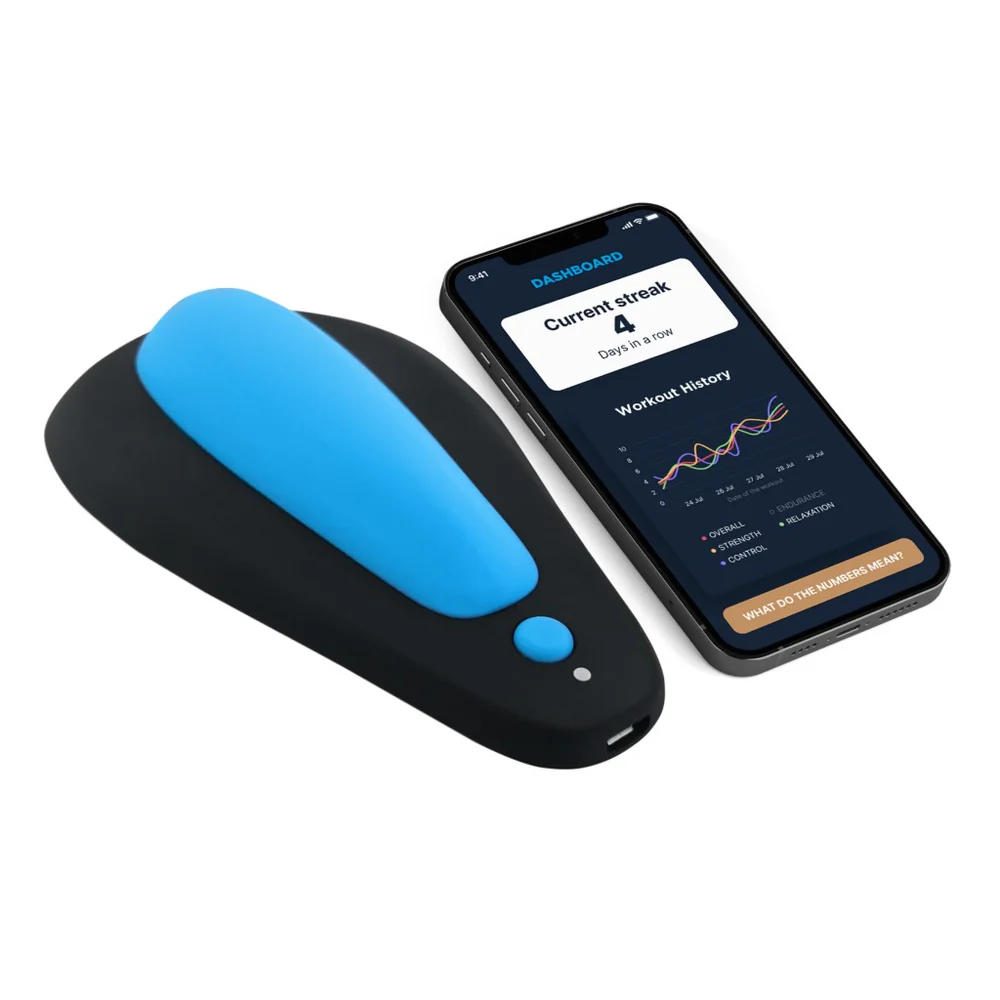
Improve Your Pelvic Floor Strength
Start rebuilding your strength with kGoal Classic to ensure correct technique and track meaningful progress.
References
Meyer, S. (1998). The effects of birth on urinary continence mechanisms and other pelvic-floor characteristics*1. Obstetrics and Gynecology, 92(4), 613–618. https://doi.org/10.1016/s0029-7844(98)00248-8
Shimamura, L. K. S., Bettiol, H., Da Silva, A. a. M., Nogueira, A. A., Barbieri, M. A., Rosa-E-Silva, J. C., & Poli-Neto, O. B. (2025). Incidence of chronic pelvic pain after childbirth and its causal association with C-section. Pain, 166(8), 1847–1858. https://doi.org/10.1097/j.pain.0000000000003519
Moossdorff-Steinhauser, H. F. A., Berghmans, B. C. M., Spaanderman, M. E. A., & Bols, E. M. J. (2021). Prevalence, incidence and bothersomeness of urinary incontinence between 6 weeks and 1 year post-partum: a systematic review and meta-analysis. International Urogynecology Journal, 32(7), 1675–1693. https://doi.org/10.1007/s00192-021-04877-w
Cho, S. T., & Kim, K. H. (2021). Pelvic floor muscle exercise and training for coping with urinary incontinence. Journal of Exercise Rehabilitation, 17(6), 379–387. https://doi.org/10.12965/jer.2142666.333
Hite, M., & Curran, T. (2020). Biofeedback for pelvic floor disorders. Clinics in Colon and Rectal Surgery, 34(01), 056–061. https://doi.org/10.1055/s-0040-1714287
Institute for Quality and Efficiency in Health Care (IQWiG). (2025, June 23). Pelvic organ prolapse: Learn More – Pelvic floor exercises and vaginal pessaries for pelvic organ prolapse. InformedHealth.org - NCBI Bookshelf. https://www.ncbi.nlm.nih.gov/books/NBK525762/
Eason, E., Labrecque, M., Marcoux, S., & Mondor, M. (2002, February 5). Anal incontinence after childbirth. https://pmc.ncbi.nlm.nih.gov/articles/PMC99311/
Fonti, Y., Giordano, R., Cacciatore, A., Romano, M., & La Rosa, B. (2009, December 1). Post partum pelvic floor changes. https://pmc.ncbi.nlm.nih.gov/articles/PMC3279110/
Dunn, G., Egger, M. J., Shaw, J. M., Yang, J., Bardsley, T., Powers, E., & Nygaard, I. E. (2019). Trajectories of lower back, upper back, and pelvic girdle pain during pregnancy and early postpartum in primiparous women. Women S Health, 15, 1745506519842757. https://doi.org/10.1177/1745506519842757
Selman, R., Early, K., Battles, B., Seidenburg, M., Wendel, E., & Westerlund, S. (2022). Maximizing Recovery in the Postpartum Period: A Timeline for Rehabilitation from Pregnancy through Return to Sport. International Journal of Sports Physical Therapy, 17(6), 1170–1183. https://doi.org/10.26603/001c.37863
Nygaard, I. E., Wolpern, A., Bardsley, T., Egger, M. J., & Shaw, J. M. (2020). Early postpartum physical activity and pelvic floor support and symptoms 1 year postpartum. American Journal of Obstetrics and Gynecology, 224(2), 193.e1-193.e19. https://doi.org/10.1016/j.ajog.2020.08.033
Disclaimer: This article is for informational purposes only and is not intended as medical advice. Always consult a qualified healthcare provider before starting any new treatment or if you experience persistent bladder symptoms.
FAQs
How soon after birth can I start pelvic floor exercises?
It depends, so it’s always best to check with your doctor or pelvic floor physical therapist first. In general, many women are cleared to begin gentle pelvic floor exercises around six weeks after delivery, once initial healing has taken place. Early postpartum recovery should focus on rest and healing rather than structured exercise. When you are cleared, start slowly with very gentle contractions and build up gradually over time. The emphasis in the early weeks should be on awareness and control, not intensity, and any discomfort is a sign to pause and seek professional guidance.
Is it normal to still have symptoms 6 months postpartum?
While many symptoms improve naturally in the first 3-6 months, persistent leakage, pain, or prolapse beyond this point warrants evaluation. About 31% of women still experience some incontinence between 6 and 12 months postpartum. Don't assume you have to live with it—targeted pelvic floor rehab can still make a significant difference even if you're months or years postpartum.
Can pelvic floor dysfunction happen after a c-section?
Yes. Pregnancy itself puts significant strain on your pelvic floor from the weight of your baby and hormonal changes that loosen supportive tissues. A C-section doesn't protect you from these effects. Additionally, the abdominal incision can lead to core weakness and scar tissue that indirectly stresses the pelvic floor. One study found that cesarean delivery actually doubled the odds of chronic pelvic pain compared to vaginal birth.
How do I know if I'm doing Kegels correctly?
Many women struggle with proper Kegel technique. Signs you're doing them wrong include feeling tension in your thighs, buttocks, or abdomen, or bearing down instead of lifting up. Using a biofeedback device like kGoal Classic shows you in real time whether you're activating the right muscles. Alternatively, a pelvic floor physical therapist can perform an internal assessment to confirm correct technique.