How Long Does It Take for Kegels to Start Working? A Realistic Timeline
Most people quit Kegels before they've given them a fair chance to work. This guide breaks down exactly when results tend to show up, according to a pelvic floor physical therapist, published research, and real exercise data from thousands of kGoal users.




Updated September 15, 2026

One of the most common questions about any type of exercise is "when will I see results?" or, to channel our inner five-year-old, "are we there yet?" Kegel exercise (also known as pelvic floor strengthening exercise) is no exception. If anything, the normal progress arc for Kegels is more of a mystery than it is with most other types of exercise.
Many people aren't very familiar with the pelvic floor to begin with, and it's hard to tell if the muscles are getting fitter when you can't see them and there's no mile time or one-rep max to track.
So let's clear up the mystery. Read on to learn how often you should do Kegels, roughly how long it takes for Kegels to work, and a few ways to speed up the process.
» New to Kegels? Start here with Kegel Exercises 101.
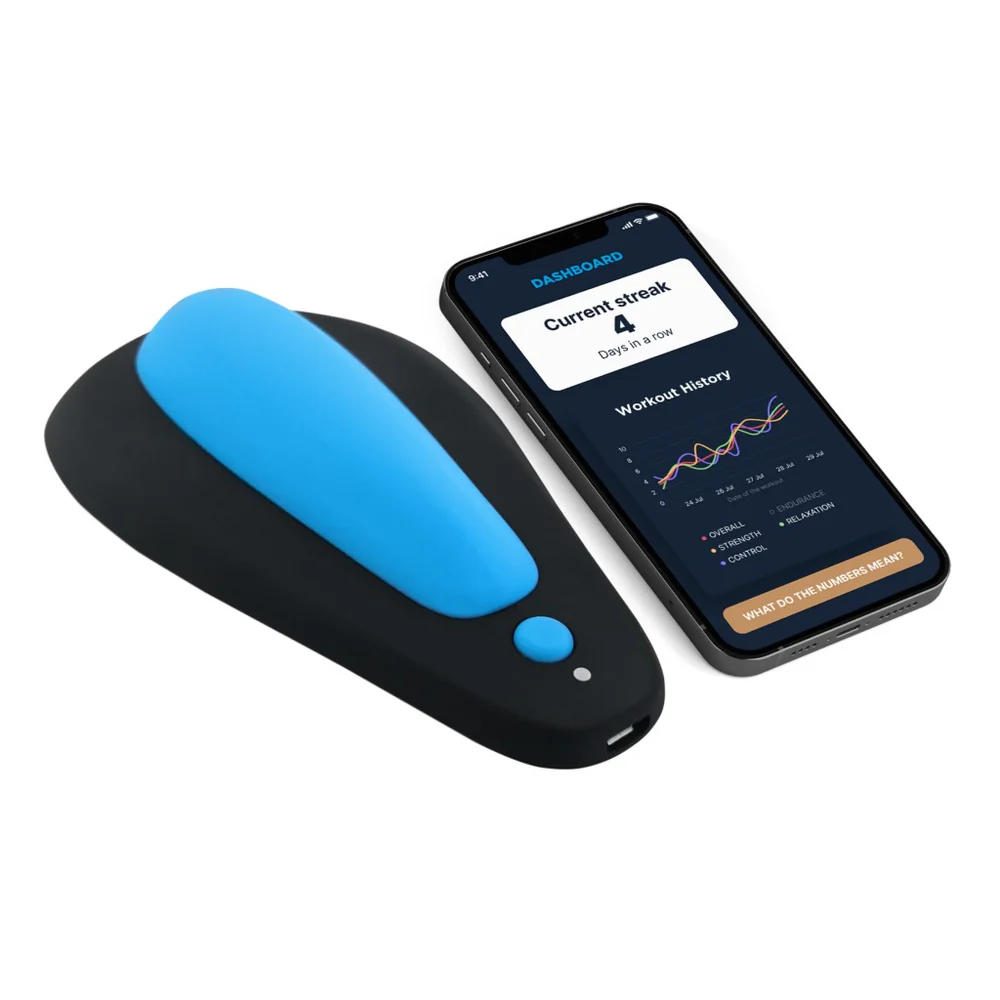
Support Your Pelvic Health the Right Way
With kGoal, you get real-time feedback that helps you master your breathing technique and relax your pelvic floor with confidence.
3 Rules for How Often to Do Kegels
You can't really guess when results will arrive without first knowing how often you're exercising. Once a month produces a very different outcome than once a day, so this is the key piece of information to settle before anything else.
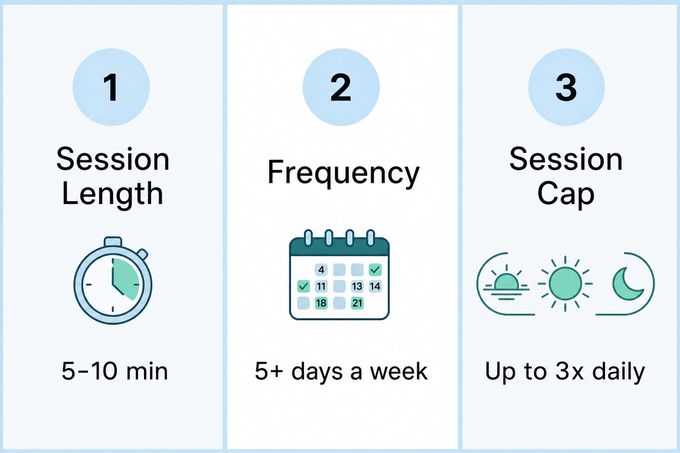
Pelvic floor physical therapists commonly recommend three ground rules:
1. Session Length
Rather than just focusing on how many Kegels to do in a day, concentrate on how long you should spend doing them. Aim for 5‒10 minutes of Kegel exercise per session, with short rests built in and a 2-minute rest in the middle if you're doing 10 minutes total.
More broadly, avoid exercising to true fatigue. Once you've lost about 50% of your strength or power, it's time to stop for that session.
2. Frequency
Exercising at least 5 days a week is a solid baseline, though every day is even better.
3. Session Cap
For the overachievers, up to 3 sessions a day is fine, ideally spaced well apart (morning, midday, and evening). However, note that it's better to exercise daily (even if it's only 1 session per day) than to do multiple sessions per day but only exercise every few days.
Going beyond 3 sessions in one day starts to run a real risk of over-training, which can cause your pelvic floor to become overactive and lead to pelvic pain or other problems. Always listen to your body. If it feels like you're over-training, you probably are.
Putting It All Together
Because roughly 5 minutes, 5 times a week is such a common recommendation from healthcare practitioners, we've based the rest of the article on this schedule. Exercise more consistently than that, and you will likely see results sooner. Fall short of it, and the process will probably take longer.
How Long Until You See Results? What 3 Sources Say
If you're wondering how long Kegel exercises take to work, here's the short version:
The technically true but far less useful answer is "it depends," since no two health journeys look identical. Still, it helps to lay out a few general rules of thumb, even if your own experience shifts in one direction or the other.
Here is that verdict broken down across three separate sources:
- Ask a pro (a pelvic floor physical therapist)
- Check the medical literature
- See what real exercise data from actual people shows
1. What a Pelvic Floor Physical Therapist Says
We spoke to Liz Miracle, PT, DPT, and the Head of Clinical Quality and Education at Origin, the largest in-network provider of pelvic floor physical therapy in the US. Her main takeaway was:
That estimate assumes a patient is exercising 5 to 7 times a week, in line with the frequency guidance above.

2. What the Medical Literature Says
There's also a deep body of medical literature on the effects of pelvic floor exercise for women and men across a range of conditions. Clinical studies on this topic rarely publish a "time to results" figure directly, but the exercise protocols that researchers choose (in other words, the duration of the study) offer a strong clue, since study designers try to avoid a program that's either too short to matter or unnecessarily long.
Here's what several notable studies used, and what they found:
Study Focus | Protocol length | Population | Result |
|---|---|---|---|
Preventing stress urinary incontinence [1] | 6 weeks | Pregnant women | Effective at reducing new-onset incontinence during pregnancy |
Improving stress urinary incontinence [2] | 3x/week for 8 weeks, with biofeedback | Women (general population) | Measurable improvement in incontinence symptoms |
Sexual arousal [3] | 1–2 weeks | Women | Improved physiological and subjective arousal measures |
Premature ejaculation [4] | 12 weeks | Men | Significantly improved sexual stamina |
Erectile dysfunction [5] | 12 weeks, with biofeedback | Men with ED | Significantly improved erectile function |
Urinary continence after prostatectomy [6] | 12 weeks, with biofeedback | Men post-surgery | Sped recovery; with gains lasting 12+ months |
3. What Real Exercise Data Shows
Lastly, we looked at anonymized data from thousands of real people using the kGoal Classic or sit-on-top trainers like the kGoal Boost for men and kGoal Boost for women. These devices are designed to help users stick with a more consistent (and more enjoyable) exercise routine through:
- Biofeedback
- Exercise measurement
- Progress tracking
- Guided workouts and games
About Our Sample
Our user base spans genders and ages, from the early 20s through 80+. The data shared here comes from a diverse sample of nearly 2,000 of those users, chosen to provide a generalized baseline.
For this data set, we had a very loose inclusion filter and considered only people who avoided gaps of more than 7 days between workouts. So, if you are exercising more consistently (daily, or at least 5x per week), it would be reasonable to expect quicker results than this data shows.
About Our Data
Our trainers focus on three aspects of pelvic floor muscle function through their recommended games and workouts:
- Strength
- Endurance
- Motor control
Because kGoal products are exercise tools rather than medical devices, this data tracks percentage improvement in muscle performance, not clinical outcomes like incontinence or erectile dysfunction directly.
Our Findings
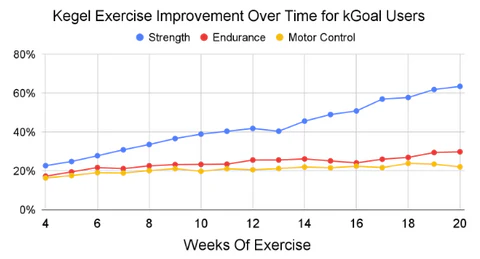
A few takeaways from that data:
- Improvements start early: Most people see roughly 20% improvement in each domain of muscle function within the first month or so.
- Strength keeps climbing: While the clinical protocols above suggest 12 weeks is enough for most people, kGoal's data shows continued gains in strength (and to a lesser extent endurance) well beyond that 3-month mark.
- Motor control levels off sooner: Most motor control improvements happen within that first month, then plateau.
Putting It All Together
All three approaches point in the same direction. Whether it's advice from a healthcare provider, the implications of a clinical study protocol, or exercise results from a large data set of real Kegel exercisers, a general rule of thumb holds:
A few factors, like age, exercise consistency, and how severe any symptoms are at the start, will always shift things slightly. But as a starting point for expectations, this is the right ballpark.
Does the Timeline Differ for Men and Women?
A pattern emerges from the research we looked at earlier. The three women-focused studies showed measurable change in as little as 1 to 8 weeks, while the three men-focused studies consistently used 12-week protocols.
Summary of Research Timeframes for Women and Men
Population | Outcome Measured | Timeframe |
|---|---|---|
Women | Preventing new incontinence during pregnancy [1] | 6 weeks |
Women | Improving existing incontinence [2] | 8 weeks |
Women | Shift in sexual arousal [3] | 1–2 weeks |
Men | Improving premature ejaculation [4] | 12 weeks |
Men | Improving erectile function [5] | 12 weeks |
Men | Recovering continence after prostate surgery [6] | 12 weeks |
Why the Timelines Look Different
It's tempting to read that as "women's pelvic floors respond faster to Kegels than men's." But that's not quite the right takeaway.
The women-focused studies here measured narrower changes, like preventing a specific new symptom or noticing a shift in arousal. The men-focused studies measured bigger, more layered outcomes, like recovering full bladder control after major surgery. Those outcomes were always going to take longer to show up clearly, regardless of gender.
Put another way: it's a difference in what was measured, not necessarily in how quickly the underlying muscle itself adapts.
What This Means for Your Own Timeline
In practice, you should rather set expectations by the type of change you're hoping for, not by gender alone. For example:
- A woman a few months postpartum working on early postpartum pelvic floor exercises and light leaking might notice a difference within the first few weeks of exercise, using a trainer like the kGoal Classic or kGoal Boost to track that early progress. (Note that you shouldn't start postpartum usage of kGoal trainers until your doctor gives you the OK, usually no earlier than the 6-week post delivery checkup).
- A man working on continence recovery after prostate surgery, using something like the kGoal Boost for men, should reasonably expect that process to take closer to 12 weeks, since that's the scale of change being rebuilt.
Neither timeline reflects a stronger or weaker starting point.
» Read more on how Kegels work for men specifically.
Is There Any Way to Speed Things Up?
The short answer is yes.
Two strategies tend to make the biggest difference, and neither involves anything gimmicky.
1. Stay Consistent, Without Over-training
As with basically every type of physical exercise, exercising more (and more consistently) means faster progress, up to a point.
That "up to a point" matters. It's definitely possible to over-train your pelvic floor muscles, which can cause the pelvic floor to become overactive and lead to pelvic pain or other unpleasant side effects.
As mentioned earlier, many pelvic floor physical therapists recommend no more than 5 to 10 minutes per session, and no more than three sessions a day at the very most.
2. Add Functional Movement
Doing Kegels while lying down or sitting is great, especially early on, when you need to focus to make sure you're maintaining proper technique. But as you get more comfortable and confident, doing Kegels while moving your body in other ways can help you level up.
A few examples:
- Standing
- Walking
- Climbing stairs
- Doing squats or lunges while Kegeling

Men looking for a more targeted progression can also check out 6 Kegel Exercises for Men to Last Longer for a more advanced routine once the basics feel comfortable.
However, there are no magic tricks. At the end of the day, what you get out of pelvic floor exercise, like any other exercise, largely depends on what you put into it.
How Long for Kegels to Work? The Bottom Line
Everybody, and every body, is different, so there's no single "everyone sees results after X weeks" answer. That said, a physical therapist's clinical experience, published research, and real kGoal user data all point in the same direction.
It's pretty common (though not guaranteed) to see pelvic floor muscle function start improving within the first month, and sticking with it for 2 to 3 months generally produces real, noticeable change. Keep going past 3 months, and you'll probably keep getting stronger to some extent. However, if you stop altogether, chances are your muscles will start regressing, so it’s worth keeping a maintenance routine going.
That raises a fair question: you can't exactly watch your pelvic floor the way you'd watch, say, your biceps. So how can you tell if Kegels are working? A Kegel trainer with real-time biofeedback, like the kGoal Classic for women, the kGoal Boost pelvic floor exerciser for men, or the Boost sit-on-top trainer for women, takes the guesswork out by showing you exactly what's happening.
Hopefully this comes as good news. A few months is not a huge ask, considering the quality-of-life improvements a healthy pelvic floor can unlock. Happy Kegeling!
Find Your Perfect kGoal Trainer
Track real progress with biofeedback and guided workouts designed to keep you consistent.
References
1. Sangsawang, B., & Sangsawang, N. (2016). Is a 6-week supervised pelvic floor muscle exercise program effective in preventing stress urinary incontinence in late pregnancy in primigravid women?: A randomized controlled trial. European Journal of Obstetrics & Gynecology and Reproductive Biology, 197, 103–110. https://doi.org/10.1016/j.ejogrb.2015.11.039
2. Aksac, B., Aki, S., Karan, A., Yalcin, O., Isikoglu, M., & Eskiyurt, N. (2003). Biofeedback and pelvic floor exercises for the rehabilitation of urinary stress incontinence. Gynecologic and Obstetric Investigation, 56(1), 23–27. https://doi.org/10.1159/000072327
3. Messé, M. R., & Geer, J. H. (1985). Voluntary vaginal musculature contractions as an enhancer of sexual arousal. Archives of Sexual Behavior, 14(1), 13–28. https://doi.org/10.1007/BF01541349
4. Pastore, A. L., Palleschi, G., Fuschi, A., Maggioni, C., Rago, R., Zucchi, A., Costantini, E., & Carbone, A. (2014). Pelvic floor muscle rehabilitation for patients with lifelong premature ejaculation: A novel therapeutic approach. Therapeutic Advances in Urology, 6(3), 83–88. https://doi.org/10.1177/1756287214523329
5. Dorey, G., Speakman, M., Feneley, R., Swinkels, A., Dunn, C., & Ewings, P. (2004). Randomised controlled trial of pelvic floor muscle exercises and manometric biofeedback for erectile dysfunction. British Journal of General Practice, 54(508), 819–825. https://www.ncbi.nlm.nih.gov/pmc/articles/PMC1324914/
6. Ribeiro, L. H., Prota, C., Gomes, C. M., de Bessa, J., Jr., Boldarine, M. P., Dall'Oglio, M. F., Bruschini, H., & Srougi, M. (2010). Long-term effect of early postoperative pelvic floor biofeedback on continence in men undergoing radical prostatectomy: A prospective, randomized, controlled trial. The Journal of Urology, 184(3), 1034–1039. https://doi.org/10.1016/j.juro.2010.05.040
FAQs
How many Kegels should you do a day?
Rather than counting individual reps, aim for 5 to 10 minutes per session, at least 5 days a week, with up to 3 sessions a day if you want to push further. Consistency across the week matters more than doing a large number in one sitting.
How often should you do Kegels?
Most pelvic floor physical therapists recommend at least 5 days a week, with daily practice being ideal. Exercising less frequently than that will likely slow down your timeline for noticing results.
Is it normal not to feel a difference after a few weeks of Kegels?
Yes. Some people notice small changes within the first month, while others need closer to 8 to 12 weeks of consistent practice before anything feels different. This doesn't necessarily mean the exercise isn't working, especially if you are still building correct technique.
Can doing too many Kegels backfire?
Yes. Overtraining the pelvic floor can cause it to become overactive, or hypertonic, which can lead to pelvic pain and other issues rather than improvement. Most physical therapists recommend capping sessions at three per day and stopping once you've lost about half your strength for that session.
How long does it take for Kegels to work for men vs. women?
Studies on women tend to measure faster-shifting outcomes, like mild incontinence or arousal, which can improve within weeks. Studies on men often measure larger outcomes, like continence recovery after prostate surgery, which are designed around 12-week protocols. The difference is in what's being measured, not necessarily how quickly the muscle itself responds.
How do I know I'm doing Kegels correctly?
The pelvic floor is hard to monitor on your own since you can't see it working and there's no obvious performance marker like a mile time. Devices that use biofeedback, like kGoal's trainers, can show in real time whether you're engaging the right muscles and how your strength, endurance, and motor control change over time.