How Kegel Exercises Benefit Women Sexually: 7 Intimacy Wins
Kegels can improve arousal, orgasm, comfort, and satisfaction. This guide covers seven research-backed benefits, how to do them correctly, and where they fall short.




Published October 21, 2026

Can a few minutes of squeezing and lifting really change your sex life? It's a fair question, and many women hesitate to ask it out loud.
Researchers have linked pelvic floor fitness to better sex for years, and newer studies now put numbers on that link. A 2024 review of 21 randomized trials found that pelvic floor training improved several parts of sexual function [1]. The picture is promising, but it's not as dramatic as some online claims suggest.
This guide unpacks how Kegel exercises benefit women sexually, what each benefit looks like in real life, and where the research runs out. Whether you're postpartum, in midlife, or simply curious, you'll see what to realistically expect.
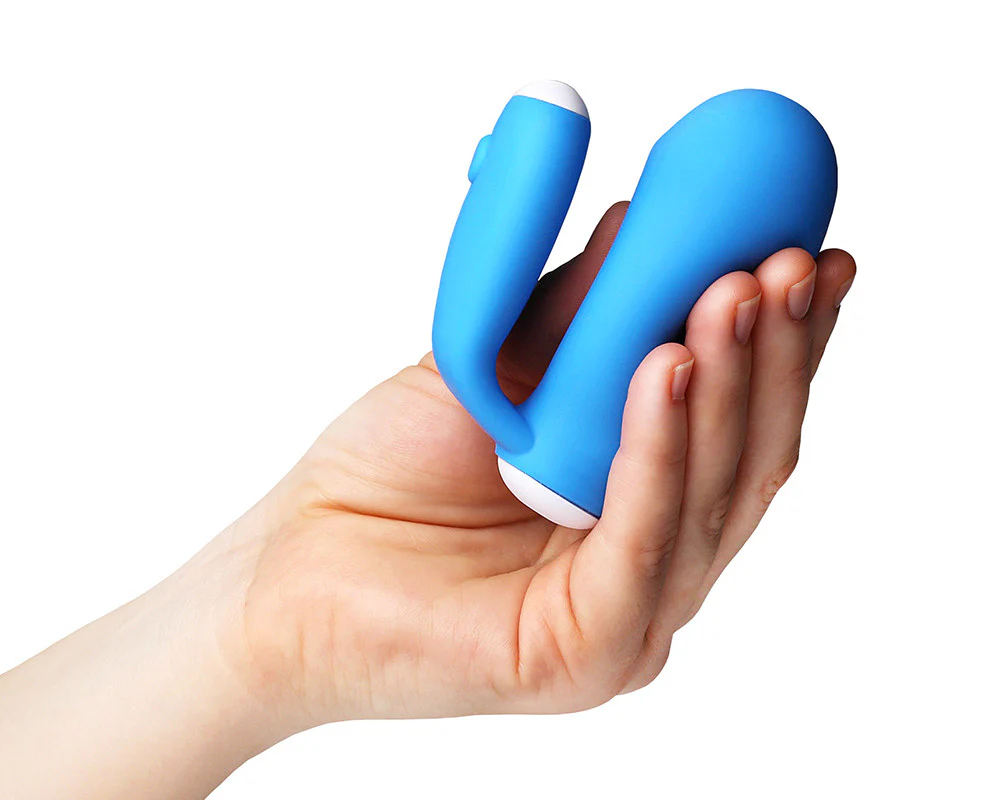
Train With Feedback, Not Guesswork
kGoal Classic shows every squeeze using real-time biofeedback.
What Kegel Exercises Actually Are
A Kegel is a simple move. You squeeze and lift your pelvic floor muscles, then fully relax them. Your pelvic floor is the hammock of muscles at the base of your pelvis, supporting your bladder, uterus, and bowel, and playing a role in sex. Both halves of the move count, and control matters more than force. A healthy pelvic floor tightens when you need it and lets go completely afterward.
Pelvic floor exercises for women can also include breathing, coordination work, and biofeedback. You may hear about "reverse Kegels" or down training, which are both variations on the opposite side of the coin from Kegel / strengthening exercise. Down training means relaxing and lengthening the muscles instead of tightening them, and it matters most if your pelvic floor is already too tight, which doctors call hypertonic.
Here's how the two compare.
| Kegels | Down Training |
|---|---|---|
What you do | Squeeze and lift, then relax | Relax and lengthen |
What it builds | Strength and control | Release and ease |
Often helps with | Weak or poorly coordinated muscles | Tight muscles and pain |
Many women need a mix of both over time. A pelvic floor physical therapist can tell you which one to focus on.
How Your Pelvic Floor Shapes Sexual Response
Your pelvic floor does more during sex than most people realize. It helps with arousal, orgasm, sensation, and comfortable penetration. Three muscle groups do most of the work:
Muscle | Main role in sex |
|---|---|
Levator ani | Supports and coordinates the whole pelvic floor |
Bulbospongiosus | Surrounds the vaginal opening and contracts during orgasm |
Ischiocavernosus | Helps blood flow into the clitoral tissue, which causes engorgement |
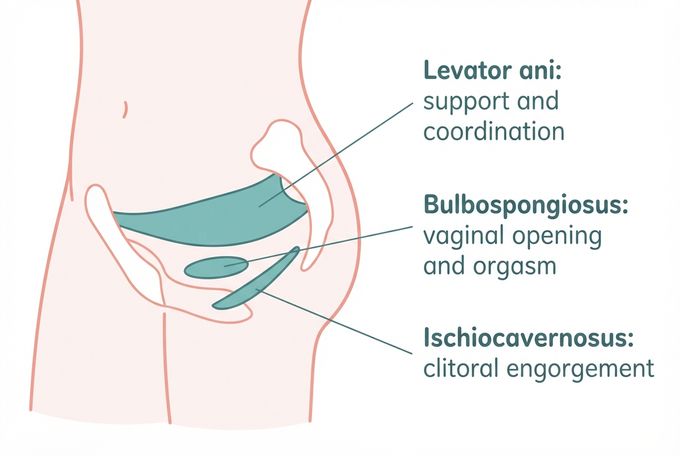
These muscles also need to relax. A pelvic floor that stays too tight can make penetration painful, and it may affect as many as 1 in 10 people [2].
Strength matters too. A 2024 review of 33 studies found that stronger pelvic floor muscles went along with better sexual function, a moderate link (r = 0.41). And every study that looked at sexual response found these muscles took part in arousal or orgasm [3].
What the Research Really Shows About Kegels and Sex
Of the 21 trials in the 2024 review, only four measured results in a similar enough way to combine. In those four, women who trained scored about 7.7 points higher than women who didn't on the Female Sexual Function Index, a standard questionnaire scored out of 36 [1].
The catch is that the researchers rated their own confidence as low because the studies and exercise programs varied so much [1]. A 2025 review of five trials in postmenopausal women found improvements too, with results swinging widely between studies [4].
So what does that mean for you?
- What the evidence supports: Small to moderate gains in arousal, orgasm, satisfaction, and sometimes pain, building over a few months.
- What it doesn't support: A guaranteed boost in sex drive, stronger orgasms every time, or a fix for every sexual concern.
7 Ways Kegel Exercises Benefit Women Sexually
Each benefit below comes with the research behind it and what you may realistically notice.
1. Easier Arousal
Your pelvic floor muscles take part in arousal, so having more control over them may help your body respond better once sex begins [3].
What you may notice: Your body feels more physically responsive once things get going. However, that's not the same as a higher sex drive.
2. Orgasms That Come More Easily
Because pelvic floor muscles take part in orgasm, researchers have looked at whether training them makes a difference [3]. It's one of the better-supported benefits.
What you may notice: Orgasm feels easier to reach or more consistent. It won't necessarily feel stronger every time.
3. More Satisfying Sex Overall
Satisfaction draws on everything above, so small gains in arousal, orgasm, and comfort can add up.
What you may notice: Sex feels more enjoyable and less frustrating, especially if poor muscle control was getting in the way.
4. Less Pain During Sex for Some Women
Stronger, better-coordinated muscles can make penetration more comfortable for some women.
The catch is that a pelvic floor that's already too tight can cause painful sex, and treatment focuses on relaxing and retraining those muscles [2]. If Kegels hurt, stop and try down training instead.
What you may notice: Penetration feels easier and more comfortable, but only if weakness or poor control was part of the problem.
5. Better Recovery After Childbirth
Pregnancy and delivery stretch and sometimes injure the pelvic floor. Kegels can help you rebuild strength and control as you heal.
What you may notice: You feel more supported, comfortable, and confident as recovery continues.
However, it's best to wait at least 6 weeks after delivery before using an insertable device. Check with your doctor about the right time for you.
6. A Stronger Sense of Support and Grip
Do Kegel exercises make you tighter? Not in the sense of physically shrinking the vagina. But stronger muscles can create a greater sense of support, grip, and control during sex, and some women describe that as feeling tighter.
What you may notice: A stronger sense of support and control, especially during recovery after birth.
7. More Confidence and Closeness During Sex
When sex feels more comfortable and responsive for you, your partner often benefits too. Research on partners is still limited, but several studies point to indirect links.
- Shared difficulties: Men whose partners have sexual dysfunction face about three times the odds of sexual difficulties themselves [8]. That shows an association, not cause and effect. It does suggest that easier arousal and less pain for you can ease pressure on both of you.
- Less worry about leaking: An estimated 25% to 38% of sexually active women with urinary incontinence limit sex because of it [9]. Less worry means more attention for each other.
- Easier conversations: Couples who talk about sex more tend to report better arousal and orgasm [10]. Kegels won't start that conversation, but knowing your own body better can help.
What you may notice: Less pressure and more attention on each other. Your partner's experience will vary too, so keep talking.
Kegel Benefits by Life Stage
Your life stage changes what you can realistically expect from Kegels. Here are the three main differences:
Life stage | What Kegels can realistically offer | What they can't change |
|---|---|---|
Reproductive years | Benefits that build over a few months of steady practice | Low desire linked to stress, medications, or relationship factors |
After childbirth | Rebuilding strength and control as you heal | The healing process itself, which does much of the work |
Menopause and beyond | Possible gains in arousal, orgasm, and satisfaction | Dryness and low desire caused by hormone changes [4][5] |
The Best Kegel Exercises for Women and How to Do Them
Technique matters more than effort. In one study of 250 women, 24% of those who said they knew how to do Kegels couldn't do one correctly on their first try. Women who had received instruction or feedback before were more likely to get it right [11].
How to Do a Kegel
Here's one way to do a Kegel correctly, step by step:
- Get comfortable: Sit or lie down, and keep your belly, thighs, and buttocks relaxed. Breathe normally.
- Squeeze: Imagine stopping gas and urine at the same time. Gently close around your anus and vagina.
- Lift: Draw that squeeze inward and upward.
- Hold and breathe: Hold for about 3 to 5 seconds while you keep breathing.
- Release fully: Relax for the same amount of time before the next squeeze.
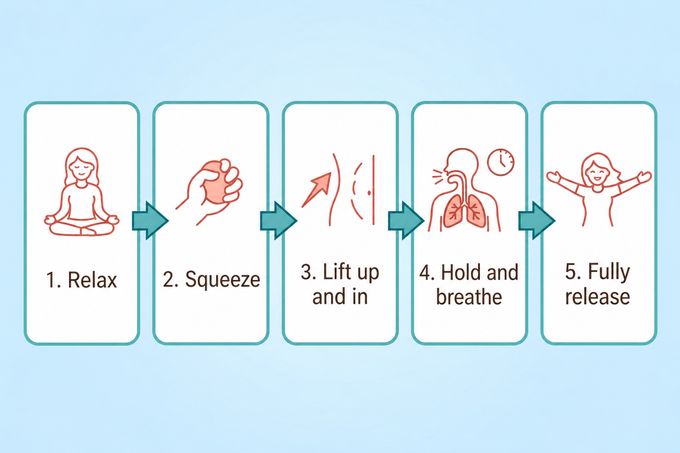
As you get stronger, build toward longer holds and add a few quick squeeze-and-release contractions. Lying down, sitting, and standing all work, so choose the position that feels most comfortable and lets you focus.
Signs You're Using the Right Muscles
The biggest mistake is pushing down instead of lifting up. It often happens when you hold your breath and brace your abs, as if you were straining on the toilet. Your pelvic floor should rise, not bulge.
You're using the right muscles when:
- You feel a gentle squeeze and lift inside the vagina
- You can breathe normally
- Your buttocks, thighs, and most of your abdomen stay relaxed
- The area between your vagina and anus moves slightly up and in (check with a mirror)
- You feel a squeeze and a small lift around a clean finger
You're probably bearing down when:
- You hold your breath
- You strongly brace your abs
- You feel bulging or pushing downward
Building a Kegel Routine That Works
A good routine is simple enough to repeat. Here's how long to practice, when to expect changes, and whether a device can help.
How Long Should a Session Last?
Many professionals advise 5 to 10 minutes per session, at least 5 days a week. That's one example, and you can adjust it to fit your life. Quality beats quantity, so focus on good technique and full relaxation between squeezes.
How Long Until You Notice a Difference?
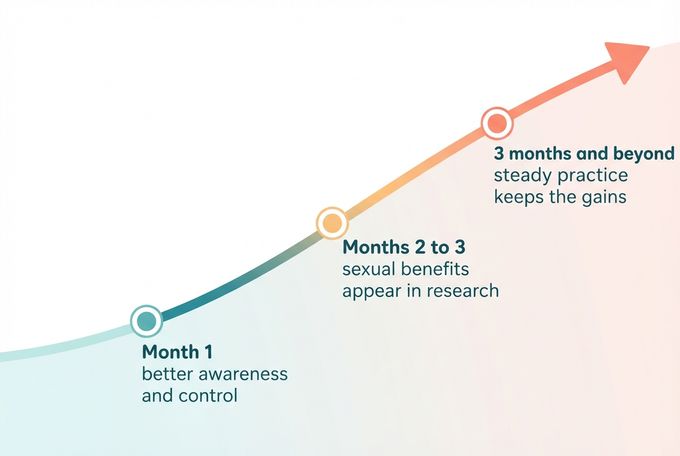
Kegels are a weeks-to-months habit, not a quick fix. Here's a realistic timeline, based on how long Kegels take to work.
When | What to expect |
|---|---|
First few weeks | Women often notice better muscle awareness and control |
Months 2 and 3 | Sexual benefits start to show up in research |
3 months and beyond | Trials found better arousal, orgasm, and satisfaction [5] |
Keep in mind that sexual benefits usually take longer than muscle control. Individual results also vary, so don't judge your progress after a few sessions.
Do You Need a Device?
Not everyone does. If you can already do a correct Kegel, exercises alone may be enough.
A device can still help if you're not sure you're squeezing the right muscles, which many women find hard to tell on their own. Tracking and games can also make a routine easier to stick with.
kGoal Classic and kGoal Boost both give real-time biofeedback through gentle vibrations and an interactive app, so the real choice is between insertable and non-insertable.
| kGoal Classic | kGoal Boost |
|---|---|---|
Type | Insertable, with adjustable size (use water-based lubricant) | Sit-on-top, used clothed, no insertion |
How it senses | 360° sensors that detect each contraction | A soft air pillow you sit on |
Best for | Building strength and control with feedback from inside the vagina, and functional exercise | Women who prefer not to insert, who have discomfort with insertion, or prefer the quicker / easier usage of a sit-on-top approach |
Workouts | Guided and gamified Kegel workouts | Guided and gamified workouts for Kegels and down training |
3 Common Myths About Kegels and Your Sex Life
Plenty of myths surround Kegels and sex. Here are three important ones worth clearing up.
- "Doing Kegels should turn me on": Pelvic floor contractions can create a sexual sensation, and that feeling is real. But they don't create desire on their own, because hormones, mood, stimulation, and your relationship matter too.
- "The more Kegels, the better": Your pelvic floor needs to relax as well as contract. If it's already tight, extra squeezing can leave you sore and make pain with sex worse.
- "Stopping my urine is the best way to practice": Stopping urine once can help you find the right muscles, but doing it regularly can interfere with normal bladder emptying.
When Kegels Aren't Enough
Kegels help when weak or poorly coordinated muscles are part of the problem, but hormones, medications, stress, pain, and relationship factors shape sexual function too. Some causes need different treatment, including these medical causes of painful sex [12]:
- Vaginal dryness: Often linked to menopause and falling estrogen levels.
- Pain conditions: Such as endometriosis and vulvodynia.
- Infections and bladder conditions: Including yeast infections and interstitial cystitis.
A too-tight pelvic floor also needs relaxation work, not strengthening.
When to See a Professional
If you've practiced correctly for 8 to 12 weeks with no change in arousal, orgasm, comfort, or satisfaction, weakness may not be your main issue. Your pelvic floor might even be too tight, and not every woman improved in the research [1].
The next step is usually an evaluation with a pelvic floor physical therapist or gynecologist. They can check whether your muscles are weak, tight, or poorly coordinated, and look for other causes.
The Bottom Line on Kegels and Women's Sexual Health
Kegels help most when your sexual concerns trace back to weak or poorly coordinated pelvic floor muscles. In practice, that can mean less grip, weaker orgasm contractions, trouble engaging your muscles during sex, or leaking that makes intimacy feel stressful. They won't treat low desire, vaginal dryness, or pain from an overly tight pelvic floor (although down training, as opposed to Kegels, can often help pain from an overly tight pelvic floor).
Focus on control, not squeezing harder, and give yourself two to three months before judging your results. If you'd like real-time feedback and progress tracking, kGoal Classic or kGoal Boost can help you build a routine that sticks, alongside professional care whenever you need it.
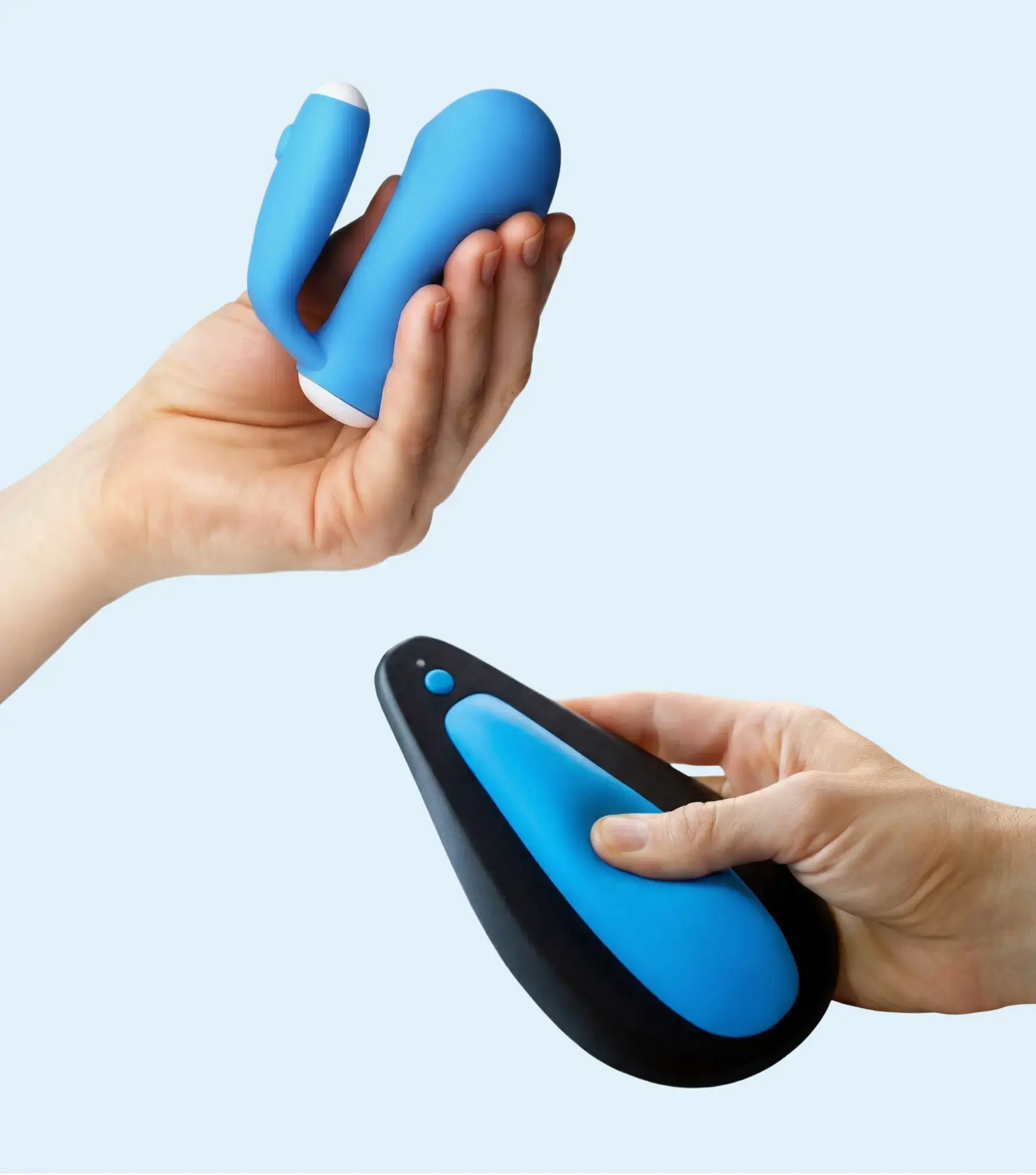
Find the kGoal Trainer That Fits You
Explore trainers for strengthening or relaxing, in both insertable and sit-on-top designs.
References
1. Jorge, C. H., Bø, K., Catai, C. C., Brito, L. G. O., Driusso, P., & Tennfjord, M. K. (2024). Pelvic floor muscle training as treatment for female sexual dysfunction: A systematic review and meta-analysis. American Journal of Obstetrics and Gynecology, 231(1). https://doi.org/10.1016/j.ajog.2024.01.001
2. Cleveland Clinic. (2022, April 26). Hypertonic pelvic floor. https://my.clevelandclinic.org/health/diseases/22870-hypertonic-pelvic-floor
3. Faucher, S., Déry-Rouleau, G., Bardin, M., & Morin, M. (2024). Investigating the role of the pelvic floor muscles in sexual function and sexual response: A systematic review and meta-analysis. The Journal of Sexual Medicine, 21(3). https://doi.org/10.1093/jsxmed/qdad175
4. García-Laria, R., Alonso-Calvete, A., Justo-Cousiño, L., Da Cuña-Carrera, I., & Soto-González, M. (2025). Effects of pelvic floor muscle training on sexual function of postmenopausal women: A systematic review and meta-analysis. Sexual Medicine, 13(4). https://doi.org/10.1093/sexmed/qfaf067
5. Nazarpour, S., Simbar, M., Majd, H. A., & Tehrani, F. R. (2018). Beneficial effects of pelvic floor muscle exercises on sexual function among postmenopausal women: A randomised clinical trial. Sexual Health, 15(5), 396–402. https://doi.org/10.1071/SH17203
6. Wu, Y. M., McInnes, N., & Leong, Y. (2018). Pelvic floor muscle training versus watchful waiting and pelvic floor disorders in postpartum women: A systematic review and meta-analysis. Female Pelvic Medicine & Reconstructive Surgery, 24(2), 142–149. https://doi.org/10.1097/SPV.0000000000000513
7. Kolberg Tennfjord, M., Hilde, G., Stær-Jensen, J., Siafarikas, F., Engh, M. E., & Bø, K. (2016). Effect of postpartum pelvic floor muscle training on vaginal symptoms and sexual dysfunction: Secondary analysis of a randomised trial. BJOG, 123(4), 634–642. https://doi.org/10.1111/1471-0528.13823
8. Chew, P. Y., Choy, C. L., Sidi, H. B., Abdullah, N., Che Roos, N. A., Salleh Sahimi, H. M., Abdul Samad, F. D., & Ravindran, A. (2021). The association between female sexual dysfunction and sexual dysfunction in the male partner: A systematic review and meta-analysis. The Journal of Sexual Medicine, 18(1), 99–112. https://doi.org/10.1016/j.jsxm.2020.10.001
9. Escura Sancho, S., Ribera Torres, L., Castelo-Branco Flores, C., & Anglès Acedo, S. (2022). Impact of urinary incontinence on women's sexuality. Clinical and Experimental Obstetrics & Gynecology, 49(2), 49–54. https://doi.org/10.31083/j.ceog4902049
10. Mallory, A. B., Stanton, A. M., & Handy, A. B. (2019). Couples' sexual communication and dimensions of sexual function: A meta-analysis. Journal of Sex Research, 56(7), 882–898. https://doi.org/10.1080/00224499.2019.1568375
11. Kandadai, P., O'Dell, K. K., & Saini, J. (2015). Correct performance of pelvic muscle exercises in women reporting prior knowledge. Female Pelvic Medicine & Reconstructive Surgery, 21(3), 135–140. https://doi.org/10.1097/SPV.0000000000000145
12. Cleveland Clinic. (2024, July 25). Dyspareunia (painful intercourse). https://my.clevelandclinic.org/health/diseases/12325-dyspareunia-painful-intercourse
FAQs
Do Kegel exercises make you tighter?
Kegels don't shrink the vagina, but stronger muscles can create a greater sense of support and grip during sex. Some women describe that as feeling tighter. The evidence for less looseness comes from small studies after childbirth.
Can Kegel exercises cause arousal?
They can create a physical sensation, because the pelvic floor takes part in arousal and orgasm. They don't create desire on their own. Hormones, mood, stimulation, and your relationship matter too.
What are the best Kegel exercises for women?
Start with a slow squeeze and lift, hold for 3 to 5 seconds while you breathe, then fully relax. Build toward longer holds and add a few quick squeezes as you get stronger. Technique matters more than effort, so check that you're lifting rather than bearing down.
How long does it take to notice sexual benefits?
Many women notice better muscle control within the first month. Sexual benefits usually take 2 to 3 months of steady practice. Results vary from person to person.
Can you do too many Kegels?
Yes. Muscles need to relax as well as contract, and extra squeezing on an already tight pelvic floor can make pain worse. Stop if Kegels hurt, and see a pelvic floor physical therapist.
Do you need a device to do Kegels?
No, but it can help. If you can do a correct Kegel, exercises alone may be enough. A device helps when you want feedback on your technique or help building a routine you can track and stick to.