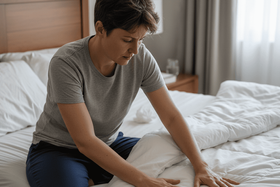
Why I Pee When I Sneeze: Causes, Fixes, and Expert Guidance
Leaking urine when you sneeze is a form of stress urinary incontinence, a mismatch between sudden pressure and pelvic floor response. It’s common, treatable, and often improves significantly within weeks of consistent, guided training.




Published May 18, 2026

Experiencing leakage every time you sneeze isn't an uncommon issue. In fact, up to 1 in 3 women experience stress urinary incontinence at some point in their lives [1], and 1 in 4 men deal with it too [2]. Yet despite how common it is, most people suffer in silence, assuming it is just something they have to live with. It isn't.
Sneezing-related leakage is a specific, correctable problem, and most people see real improvement within 8 to 12 weeks with the right approach. In this guide, we will break down the causes of the leakage, what your symptoms are telling you, and the most effective ways to fix it.
What Actually Happens When You Pee During a Sneeze
A sneeze is one of the most forceful things your body does involuntarily. It creates a sudden spike in pressure inside your abdomen, and that pressure pushes down on your bladder in an instant.
Normally, your pelvic floor muscles clamp down reflexively to counter that pressure and keep things sealed. But when those muscles are weak, slow, or poorly timed, the pressure wins, and a small leak happens [3].
That is why leakage often only occurs during sneezes, coughs, or laughter and not throughout the rest of the day. Your bladder is fine. It is the response time that needs work.
Why Peeing When You Sneeze is Actually a Good Sign
If leakage only happens during high-pressure moments like sneezing, that is actually encouraging news. It means your bladder is storing urine normally, and your system is working in most situations. It is the sudden pressure spike that catches it off guard.
This pattern is also a sign that you are likely to respond well to conservative treatment like pelvic floor training or Kegels, without needing anything more involved.

Stop Leaks With Confidence
kGoal products provide clinical-grade biofeedback to ensure you're training correctly from the start.
The Most Common Causes of Peeing When You Sneeze
Three main reasons cause leaking when you sneeze [4]:
- Pelvic floor muscle weakness is the most common factor. When the muscles lack the bulk or strength to close the urethra against a force, leakage occurs.
- Poor muscle timing is a functional problem rather than a strength problem. Your muscles might be strong enough, but they don't activate fast enough to "catch" the sudden pressure of a sneeze. This explains why even people who do regular Kegels can still experience leakage.
- Urethral hypermobility occurs when the connective tissues supporting the urethra become lax. Under the weight of a sneeze, the urethra shifts out of its stable position, making it impossible for even strong muscles to keep the seal tight [5].
Why Women Pee When They Sneeze
For women, pregnancy and childbirth are the primary triggers.
During pregnancy, up to 50% of women report stress incontinence due to the sustained weight on the pelvic floor.
Vaginal delivery can further stretch or damage the nerves and connective tissues, especially if the pushing stage is prolonged.
Also, the decline of estrogen during menopause can thin the tissues of the urinary tract, reducing the body's natural "cushion" against sudden pressure spikes [6].
Why Men Pee When They Sneeze
In men, this issue is rarely about general aging and more often linked to specific medical events. The most frequent causes are:
Recovery from prostate cancer surgery (prostatectomy).
Pelvic nerve injury.
Direct damage to the urinary sphincter.
However, high-impact athletes, like heavy weightlifters or runners, can also develop this issue if they habitually generate extreme abdominal pressure without training their pelvic floor to match that load [7].
Why Peeing When You Sneeze Does Not Happen Every Time
Most people notice that leakage does not occur with every single sneeze. It may only happen when your bladder is fuller, during an illness with repeated sneezing, or when you're fatigued or dehydrated.
Hormonal fluctuations, poor sleep, and recent high-impact exercise can all temporarily worsen things.
Other Factors That Make Peeing When You Sneeze Worse
A few contributors often go unrecognized because they do not show up on basic strength testing:
- Breath-holding or excessive abdominal bracing during exertion increases downward pressure on the bladder without triggering a matching pelvic floor response [8].
- Chronic constipation, ongoing coughing, and high-impact exercise can also repeatedly overload pelvic support structures over time, making symptoms worse.
What Happens If Peeing When You Sneeze is Left Untreated
Sneezing-related leakage is often dismissed as minor or as something to just manage with pads. But ignoring it carries real costs.
1. It Can Progress to Continuous Leakage
Longitudinal studies show that untreated stress urinary incontinence often progresses. Early leakage during sneezing can develop into leakage during lower-pressure activities like walking or standing [9].
2. It Can Push You to Stop Exercising
Many people will have leakage when running and will quietly stop exercising to avoid leaking in public. That avoidance worsens overall pelvic health and general well-being over time.
3. It Can Lead to Skin Irritation and Infections
Repeated moisture exposure increases the risk of skin irritation and urinary tract infections.
4. It Takes a Real Toll on Quality of Life
Even mild leakage is strongly associated with social withdrawal, reduced confidence, and avoiding activities that involve laughing, exercising, or being around others.

Working with a Pelvic Floor Physical Therapist to Stop Peeing When You Sneeze
A pelvic floor physical therapist (PFPT) is the most effective starting point for stress urinary incontinence, for both men and women. They are often treated as a last resort when they should actually be the first call.
How Can a Pelvic Floor Physical Therapist Help With Sneeze Leakage
A PFPT can assess muscle strength and coordination, pinpoint whether the problem is weakness, timing, or urethral support, and build a plan tailored to you. They can also identify whether your pelvic floor muscles are over-tight, which requires relaxation pelvic floor training approaches rather than more strengthening.
Many people work with a therapist to establish correct technique, then continue at home between sessions.
Cost and location can be real barriers to seeing a PFPT. If in-person therapy is not accessible, at-home biofeedback training tools are the next best option. But even limited PT guidance makes a meaningful difference where possible.
Pelvic Floor Training to Stop Peeing When You Sneeze
Pelvic floor muscle training reduces stress urinary incontinence symptoms in 50 to 75% of patients when done correctly.
That last part matters: studies show up to 50% of people perform Kegel exercises incorrectly without feedback, often pushing down instead of lifting up [10]. This applies to both men and women.
Kegels and Sneeze Leakage
For sneeze leakage specifically, training should focus on fast reflexive contractions and pre-emptive activation, not just long holds. Continence during a sneeze is a speed and coordination skill as much as a strength one.
A good starting point includes short, rapid contractions to build fast-twitch responsiveness, rehearsal of the Knack technique, and relaxation phases to avoid over-bracing.
How Biofeedback Devices Help With Sneeze Leakage
Most people genuinely cannot tell whether they are contracting, relaxing, or bearing down without feedback. Biofeedback devices solve this by showing you in real time what your pelvic floor is actually doing, which is exactly the kind of coordination training that sneeze leakage requires.
Why Biofeedback Devices are Best for At-home Training
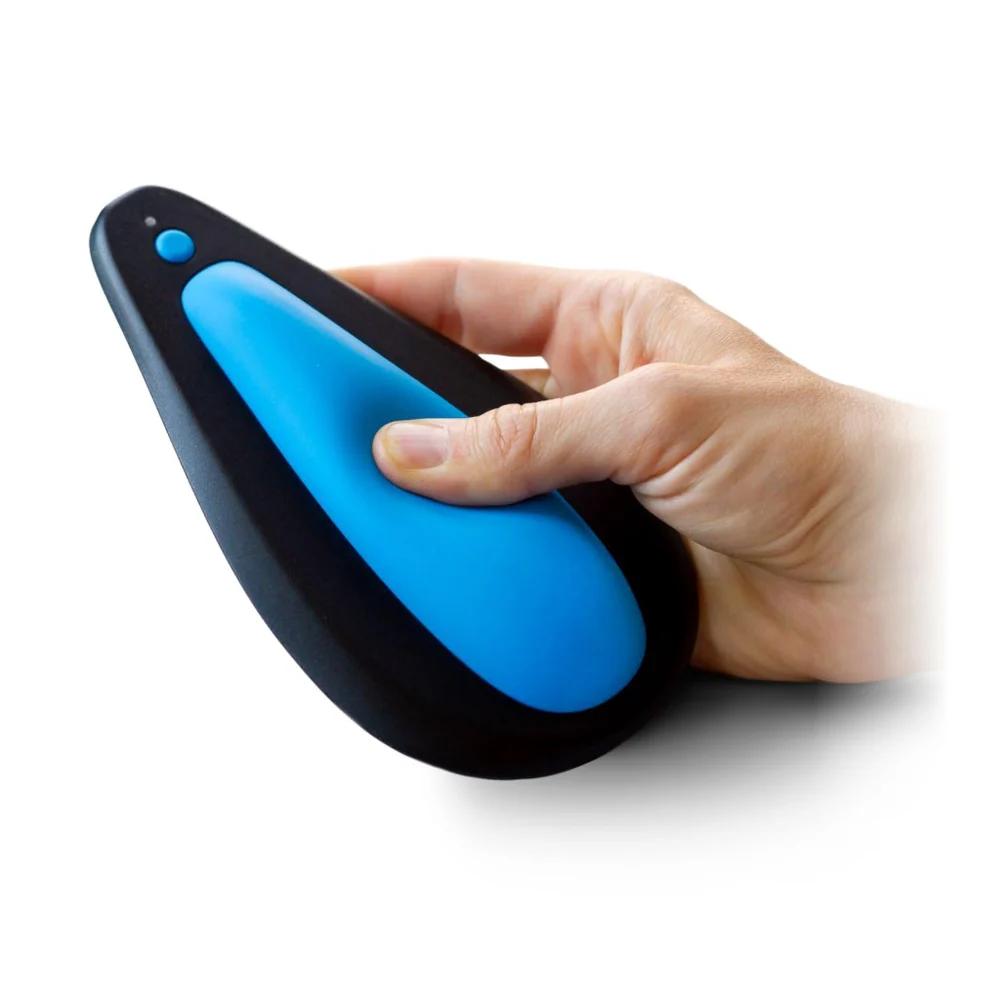
Pelvic floor PTs often recommend biofeedback tools like kGoal Boost for men, kGoal Boost for women, kGoal Intimflex for women or kGoal Classic for women for practice outside the clinic.
These devices deliver both visual feedback through the app and tactile vibrational feedback through the device itself during Kegel exercises for women and men.
Most competing products only offer visual feedback through an app screen. That physical signal helps build the fast reflexive muscle response that sneeze leakage specifically requires.
kGoal Boost also supports Down Training, which is relaxation-focused exercise for people whose pelvic floor muscles are over-tight rather than weak. And the device makes pelvic floor exercise considerably less boring, which is one of the most underrated factors in actually building a consistent routine.
What You Can Do at Home to Stop Peeing When You Sneeze
1. The Knack Technique for Sneeze Leakage
The Knack is a simple timing trick that can reduce leakage immediately, without any equipment. It works by contracting your pelvic floor muscles just before and during a sneeze, so the muscles are already braced when the pressure hits. Studies show this anticipatory contraction significantly reduces leakage [11].
How to do it:
- Get ready when you feel a sneeze coming.
- Squeeze your pelvic floor muscles upward, as if stopping the flow of urine.
- Hold that contraction through the sneeze.
- Release once it passes.
With practice, it becomes faster and more automatic. It works just as well for coughs and laughing, too.
2. Kegel Exercises for Sneeze Leakage
Kegels are the foundation of pelvic floor training for both men and women. The goal is to strengthen and coordinate the muscles that control the bladder, so they respond faster and more reliably under pressure.
How to do them correctly:
- Sit, lie down, or stand in whatever position feels most comfortable.
- Squeeze and lift the pelvic floor muscles upward, as if stopping the flow of urine.
- Hold for 3 to 5 seconds, then fully release.
- Rest for an equal amount of time before the next contraction.
- Aim for a mix of longer holds and short, rapid squeezes to build both strength and speed.
- Breathe normally throughout and never hold your breath.
The most common mistake is pushing down instead of lifting up. If you are unsure whether you are doing it correctly, a biofeedback device or pelvic floor PT can confirm your technique.
3. Breathing and Pressure Management When You Sneeze
Breath-holding during exertion is a surprisingly common contributor to leakage that most people do not connect to their symptoms. When you hold your breath, downward pressure on the bladder increases without a matching pelvic floor response.
How to manage pressure better:
- Exhale slowly through exertion rather than holding your breath.
- Breathe in through the nose and out through the mouth during exercise.
- Practice letting your belly expand naturally on the inhale and gently draw in on the exhale.
- Avoid bearing down or bracing your abdomen tightly during daily movements.
4. Lifestyle Changes That Help With Sneeze Leakage
A few simple habit adjustments can meaningfully reduce how often symptoms occur:
- Reduce caffeine and alcohol, both of which irritate the bladder and increase urgency.
- Manage constipation, which puts ongoing downward pressure on pelvic structures.
- Aim for modest weight loss if relevant, as even a small reduction is associated with measurable improvements in leakage frequency.
- Treat a chronic cough if that is an ongoing issue, as repeated coughing is one of the most common aggravators of sneeze leakage.
Stop Leaking When You Sneeze With kGoal
- Confirms when you are working the right muscles
- Get real-time feedback through the app and through the device itself
- Gamification features make Kegels actually fun to stick to
How to Know Your Sneeze Leakage Is Improving
Improvement does not always mean leakage stops immediately. Early progress often looks like fewer episodes per week, smaller leaks, or better control during stronger sneezes. Keeping a simple bladder diary tracking frequency and volume is one of the most reliable ways to see whether training is working.
If there is no improvement after 8 to 12 weeks of consistent, correctly performed training, that is a signal to seek reassessment, not to give up. Most people with sneeze-related leakage see significant improvement with early intervention, and many reach full resolution without ongoing treatment.
References
1. Urinary incontinence - Symptoms and causes. (n.d.). Mayo Clinic. https://www.mayoclinic.org/diseases-conditions/urinary-incontinence/symptoms-causes/syc-20352808
2. Urology Associates, Denver Urology. (2024, August 23). The guys guide to male incontinence. Urology Associates of Colorado | Denver Urologists. https://www.denverurology.com/urology-blog/guys-guide-male-incontinence/
3. Stress incontinence - Symptoms and causes. (n.d.). Mayo Clinic. https://www.mayoclinic.org/diseases-conditions/stress-incontinence/symptoms-causes/syc-20355727
4. Stress incontinence. (2025, December 3). Cleveland Clinic. https://my.clevelandclinic.org/health/diseases/22262-stress-incontinence
5. Rigicon, Inc. (2025, August 14). Urethral hypermobility: causes, diagnosis, and treatment options. Rigicon. https://www.rigicon.com/glossary-term/urethral-hypermobility/
6. Pregnancy and bladder control. (2026, February 13). Cleveland Clinic. https://my.clevelandclinic.org/health/diseases/16094-pregnancy-and-bladder-control
7. Professional, C. C. M. (2025, December 3). Incontinence after prostate surgery. Cleveland Clinic. https://my.clevelandclinic.org/health/symptoms/incontinence-after-prostate-surgery
8. Symptoms & Causes of Bladder Control Problems (Urinary Incontinence). (2025, October 7). National Institute of Diabetes and Digestive and Kidney Diseases. https://www.niddk.nih.gov/health-information/urologic-diseases/bladder-control-problems/symptoms-causes
9. Kołodyńska, G., Zalewski, M., & Rożek-Piechura, K. (2019). Urinary incontinence in postmenopausal women – causes, symptoms, treatment. Menopausal Review, 18(1), 46–50. https://doi.org/10.5114/pm.2019.84157
10. Cross, D., Waheed, N., Krake, M., & Gahreman, D. (2022). Effectiveness of supervised Kegel exercises using bio-feedback versus unsupervised Kegel exercises on stress urinary incontinence: a quasi-experimental study. International Urogynecology Journal, 34(4), 913–920. https://doi.org/10.1007/s00192-022-05281-8
11. Miller, J. M., Sampselle, C., Ashton-Miller, J., Hong, G. S., & DeLancey, J. O. L. (2008). Clarification and confirmation of the Knack maneuver: the effect of volitional pelvic floor muscle contraction to preempt expected stress incontinence. International Urogynecology Journal, 19(6), 773–782. https://doi.org/10.1007/s00192-007-0525-3
FAQs
Is it normal for a woman to pee a little when you sneeze?
It’s common—affecting up to 1 in 3 women at some point—but it’s not something that has to be accepted as normal. Sneezing-related leakage reflects a correctable mismatch between sudden pressure and pelvic floor response. Most people see meaningful improvement with targeted training.
Can men pee when they sneeze?
Yes. Men experience stress urinary incontinence, particularly after prostate surgery, with aging, or due to pelvic floor weakness. The underlying mechanism is the same, and pelvic floor training is effective for men and women alike.
How do I stop peeing when I sneeze?
The most effective starting point is pelvic floor muscle training with a focus on fast, reflexive contractions and the “Knack” pre-activation technique. Using a biofeedback device ensures correct muscle activation, which is the most common reason at-home training fails. Working with a pelvic floor physical therapist, even briefly, can significantly accelerate results.
How long does it take to see improvement?
Most people with isolated sneeze leakage notice meaningful improvement within 6–12 weeks of consistent, correctly performed training. Maximum benefit typically builds over 12–16 weeks. Early intervention matters: starting within the first year of symptoms is associated with significantly better outcomes.
What if Kegel exercises don’t help?
If leakage persists after 8–12 weeks of consistent training, two things are worth checking: whether technique is actually correct (biofeedback helps confirm this), and whether a pelvic floor physical therapist has been consulted. If both have been addressed and symptoms continue, referral to a pelvic health specialist is the appropriate next step.